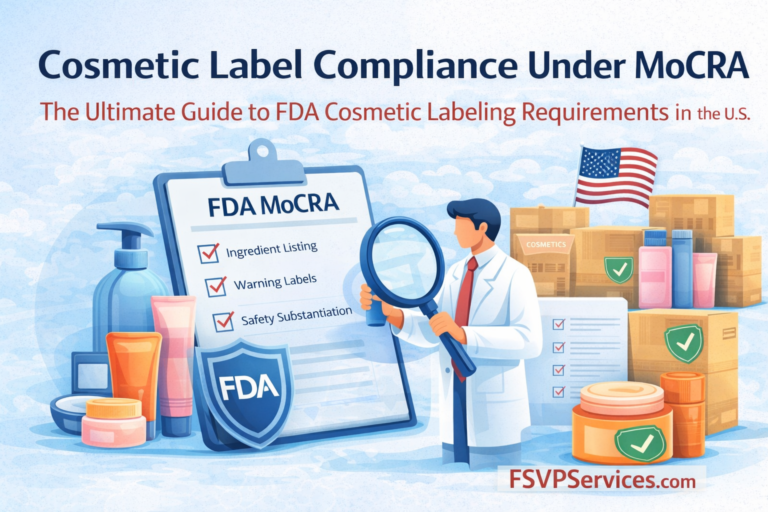
Cosmetic Label Compliance Under MoCRA: The Ultimate Guide to FDA Cosmetic Labeling Requirements in the U.S.
In today’s highly regulated market, cosmetic label compliance is no longer a secondary consideration—it is a core business requirement. With the introduction of the Modernization of Cosmetics Regulation Act of 2022 (MoCRA), the U.S. Food and Drug Administration (FDA) now has expanded authority over cosmetic products, placing greater emphasis on labeling accuracy, transparency, and regulatory accountability. For cosmetic brands, importers, manufacturers, and distributors, understanding and implementing FDA cosmetic labeling requirements is critical to successfully entering and operating in the U.S. market. This guide provides a comprehensive breakdown of cosmetic label compliance, including FDA regulations, MoCRA requirements, FTC guidelines, and CBP import rules—along with how to build a
system-driven compliance framework that keeps your products audit-ready at all times.
What Is Cosmetic Label Compliance?
Cosmetic label compliance refers to the process of ensuring that all product labels meet applicable U.S. regulatory requirements.
This includes compliance with:
- FDA Cosmetic Labeling Requirements (21 CFR Parts 701 & 740)
- MoCRA Compliance (Modernization of Cosmetics Regulation Act)
- FTC Green Guides (Marketing & Environmental Claims)
- CBP Requirements (19 CFR §134 – Country of Origin Labeling)
A compliant label must accurately communicate:
- Product identity
- Ingredient composition
- Usage instructions
- Safety warnings
- Responsible business information
Failure to meet cosmetic regulatory compliance standards can result in enforcement actions, import refusals, and reputational damage.
Why MoCRA Changed Everything
The Modernization of Cosmetics Regulation Act (MoCRA) represents the most significant update to U.S. cosmetic regulations in decades.
Under MoCRA compliance, the FDA now has expanded authority to:
- Enforce product safety requirements
- Require facility registration and product listing
- Mandate adverse event reporting
- Increase oversight of labeling and claims
This means that cosmetic label compliance is no longer just about formatting—it is directly tied to product safety and regulatory accountability.
Brands must now treat labeling as part of a comprehensive compliance system, not a standalone task.
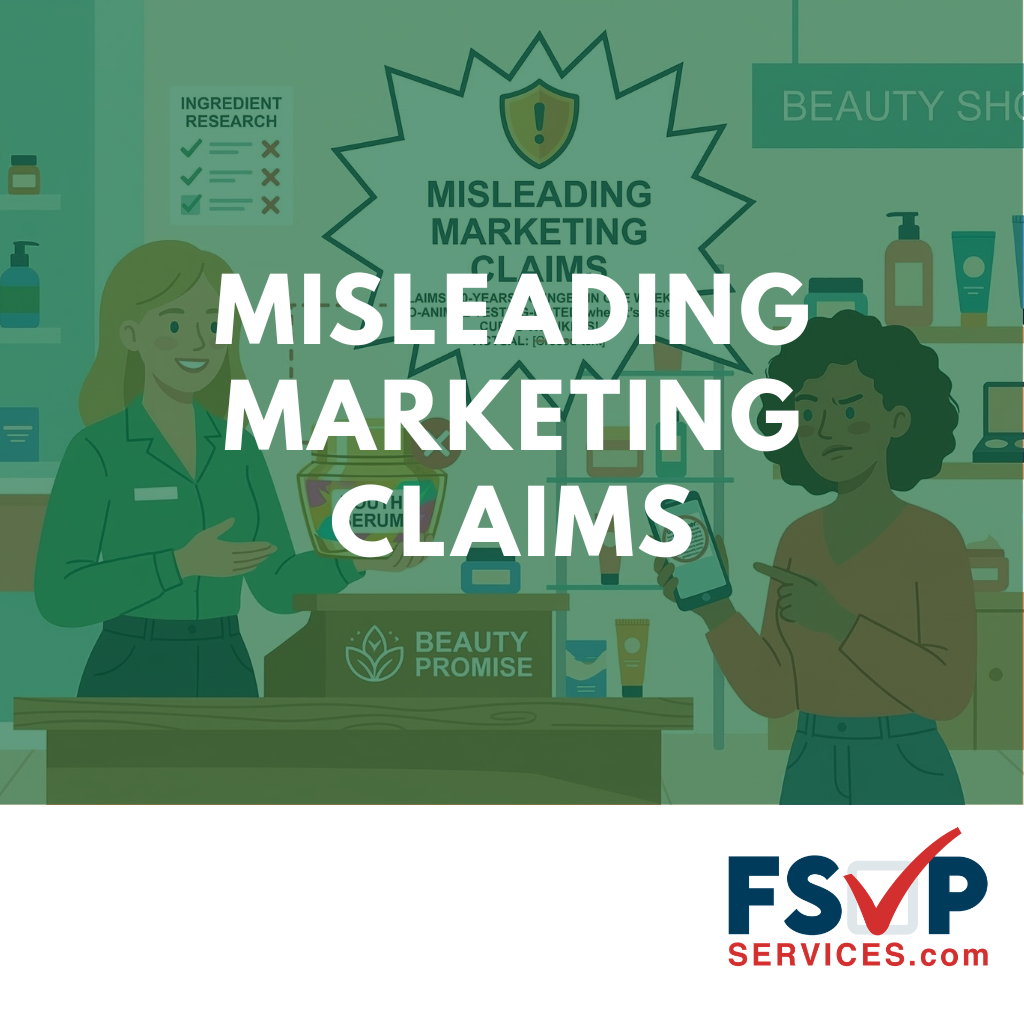
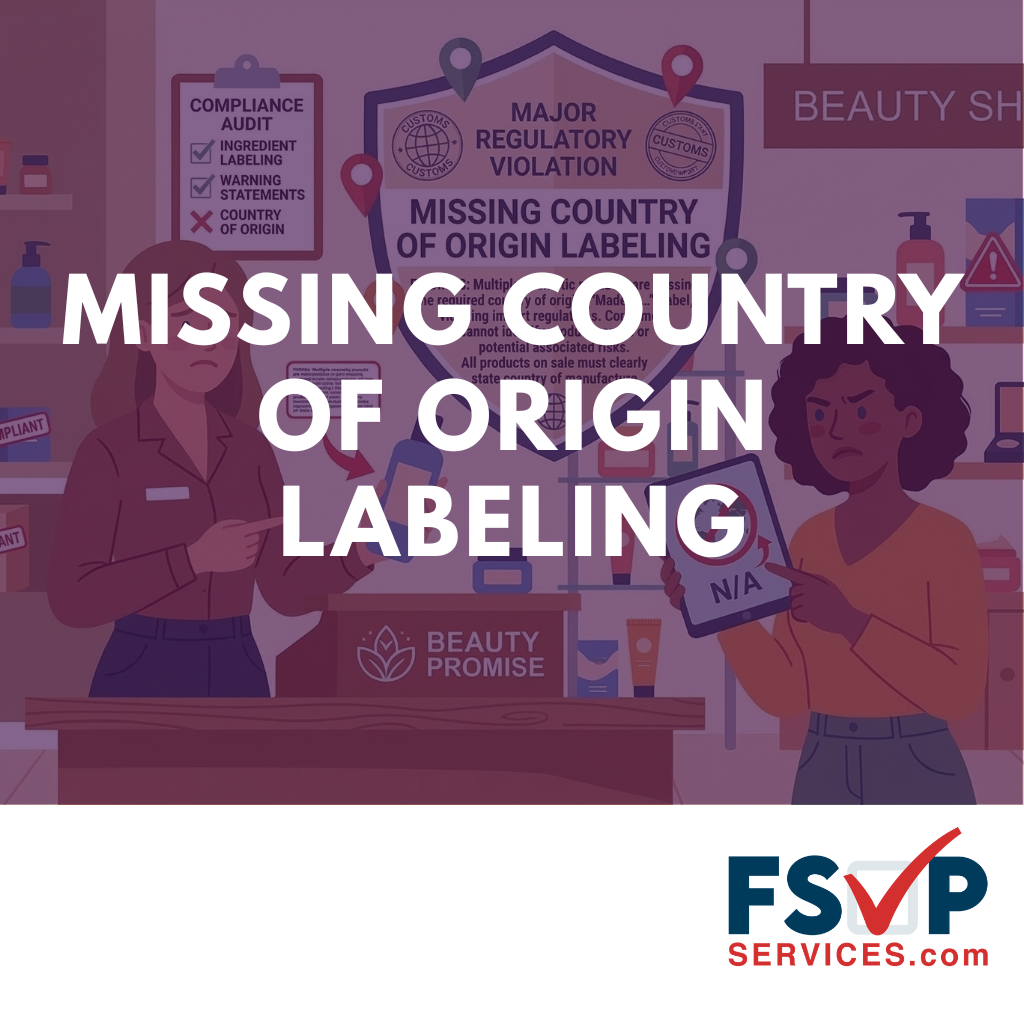
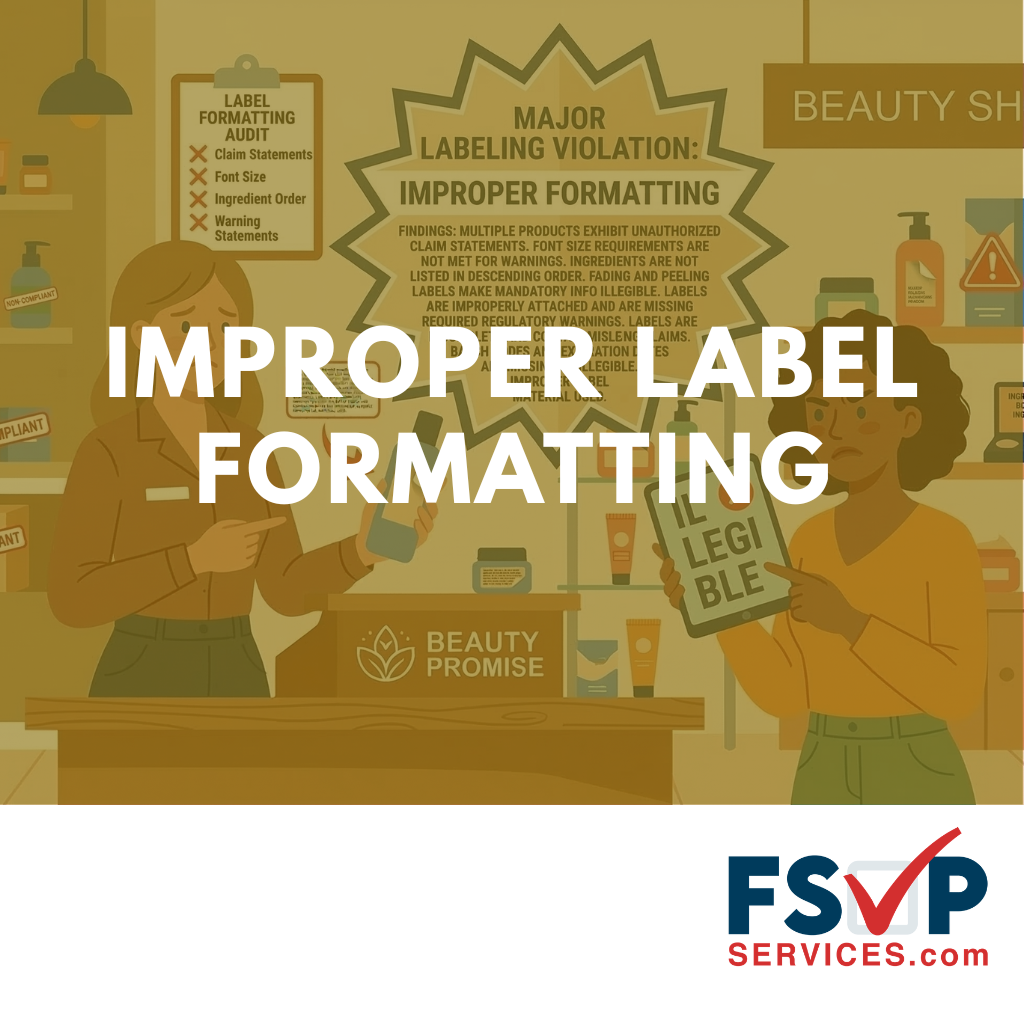
The Real Risk: Why Most Cosmetic Labels Fail Compliance
FDA Cosmetic Labeling Requirements (21 CFR 701 & 740)
To achieve full FDA cosmetic labeling compliance (21 CFR 701 & 740), every product must meet specific structural and content requirements.
1. Principal Display Panel (PDP)
- Product identity
- Net quantity of contents
2. Information Panel
- Ingredient declaration
- Business name and address
- Required warnings
3. Ingredient Declaration
- Must follow INCI naming conventions
- Listed in descending order of predominance
4. Warning Statements (21 CFR 740)
- Required for certain product categories such as:
- Aerosols
- Feminine hygiene products
- Products with specific risk profiles
5. Business Information
- Manufacturer, packer, or distributor name
- Business address
Achieving cosmetic label compliance requires proper placement, formatting, and consistency across all label elements.
MoCRA Compliance and Its Impact on Labeling
Increased FDA Enforcement Authority
Greater Scrutiny of Ingredient Disclosures
Stronger Expectations for Documentation
Integration of Labeling into Overall Compliance Systems
Brands must ensure that their cosmetic labeling compliance aligns with broader regulatory obligations, including safety substantiation and product registration.
FTC Green Guides: Marketing Claims Compliance
One of the most overlooked aspects of cosmetic label compliance is adherence to FTC Green Guides.
These guidelines regulate marketing claims such as:
- “Natural”
- “Organic”
- “Eco-friendly”
- “Sustainable”
To meet cosmetic regulatory compliance, all claims must be:
- Truthful
- Substantiated
- Not misleading
Even if your FDA cosmetic labeling is compliant, misleading claims can result in FTC enforcement actions.
Why Cosmetic Label Compliance Matters
Imported cosmetics must show country of origin (19 CFR §134) for customs clearance, import compliance, and consumer transparency. Failing to comply = delayed shipments and regulatory headaches.
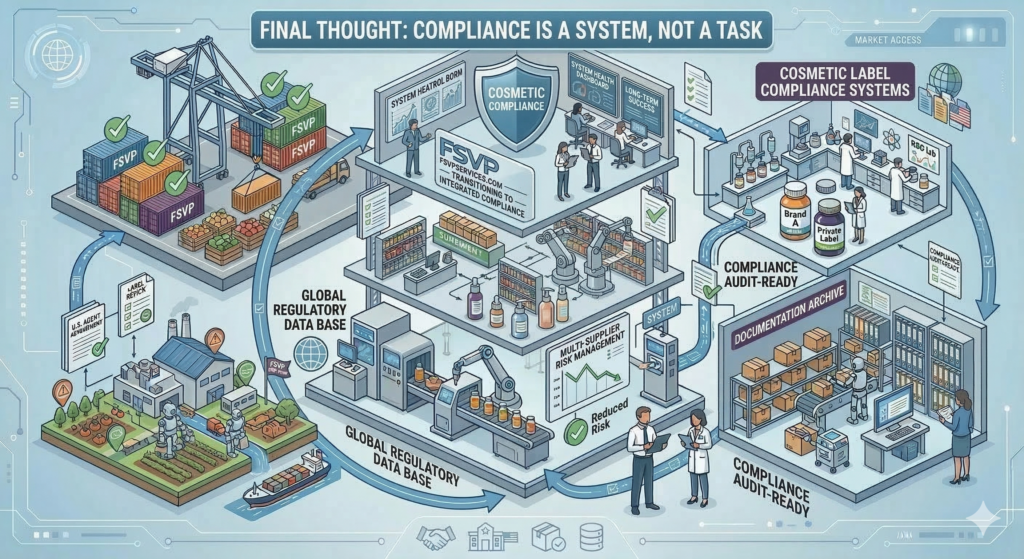
Compliance isn’t a one-time task—it’s a system:
- Continuous monitoring
- Structured processes
- Integrated systems
At FSVPServices.com, we go beyond checklists, building compliance frameworks that include:
- Document control
- Supplier management
- Risk assessment
- Corrective actions
- Training & competency
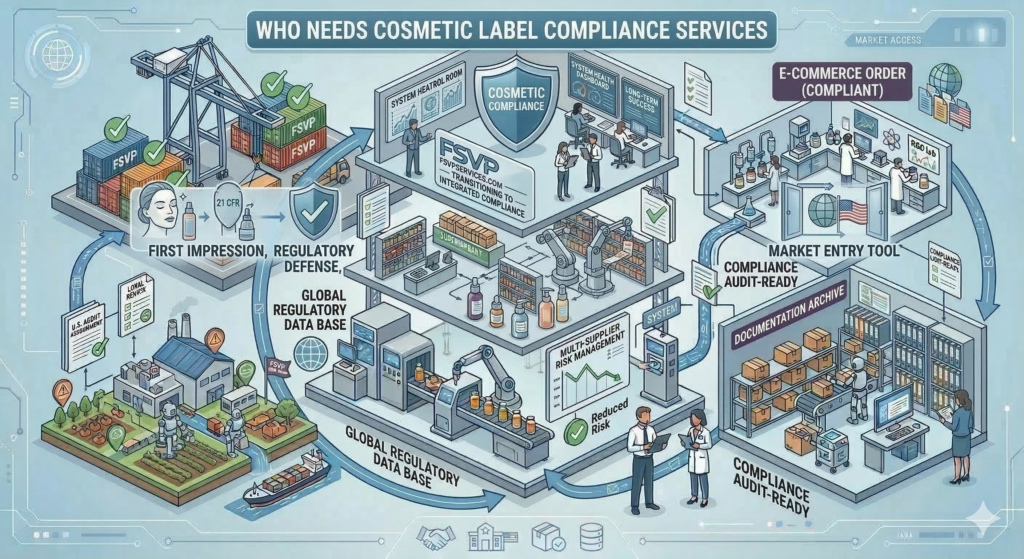
Your label becomes more than just packaging—it’s your first impression, regulatory defense, and market entry tool.
How We Help You Win
Our Cosmetic Label Regulatory Review ensures labels meet:
- FDA & MoCRA standards
- FTC marketing guidelines
- CBP country of origin rules
What you get:
- Compliance Report: Gap analysis, corrective actions, citations
- Certificate: Audit-ready proof of compliance
Benefits of prioritizing compliance:
- Faster product launches
- Lower enforcement risk
- Better retailer acceptance
- Increased consumer trust
Perfect for:
- U.S. brands
- Private labels
- Importers, distributors
- Contract manufacturers
- E-commerce cosmetic brands
Proactive compliance isn’t optional—it’s a competitive advantage. Reach out today to start your Cosmetic Label Regulatory Review and protect your products, your brand, and your market success.
Common Questions About Cosmetic Label Compliance
What is required for cosmetic labeling in the U.S.?
Cosmetic labels must comply with FDA (21 CFR 701 & 740), MoCRA, FTC guidelines, and CBP country of origin requirements.
What is MoCRA and how does it affect labeling?
MoCRA expands FDA authority and increases expectations for labeling accuracy, safety, and transparency.
Do cosmetic labels require ingredient disclosure?
Yes. Ingredients must be listed using INCI names in descending order of predominance.
Are marketing claims regulated?
Yes. The FTC requires all claims to be truthful, substantiated, and not misleading.
Start Your Cosmetic Label Compliance Journey
Ensure your products meet:
- ✅ FDA cosmetic labeling requirements
- ✅ MoCRA compliance standards
- ✅ FTC and CBP regulations
Final Thought
Reach out today to begin your Cosmetic Label Regulatory Review Compliance Assessment.
Compliant Labels. Confident Launches. Regulatory Peace of Mind.