Stop Managing FSVP in Email — Engineer a System That Works
The Illusion of “Staying Organized”
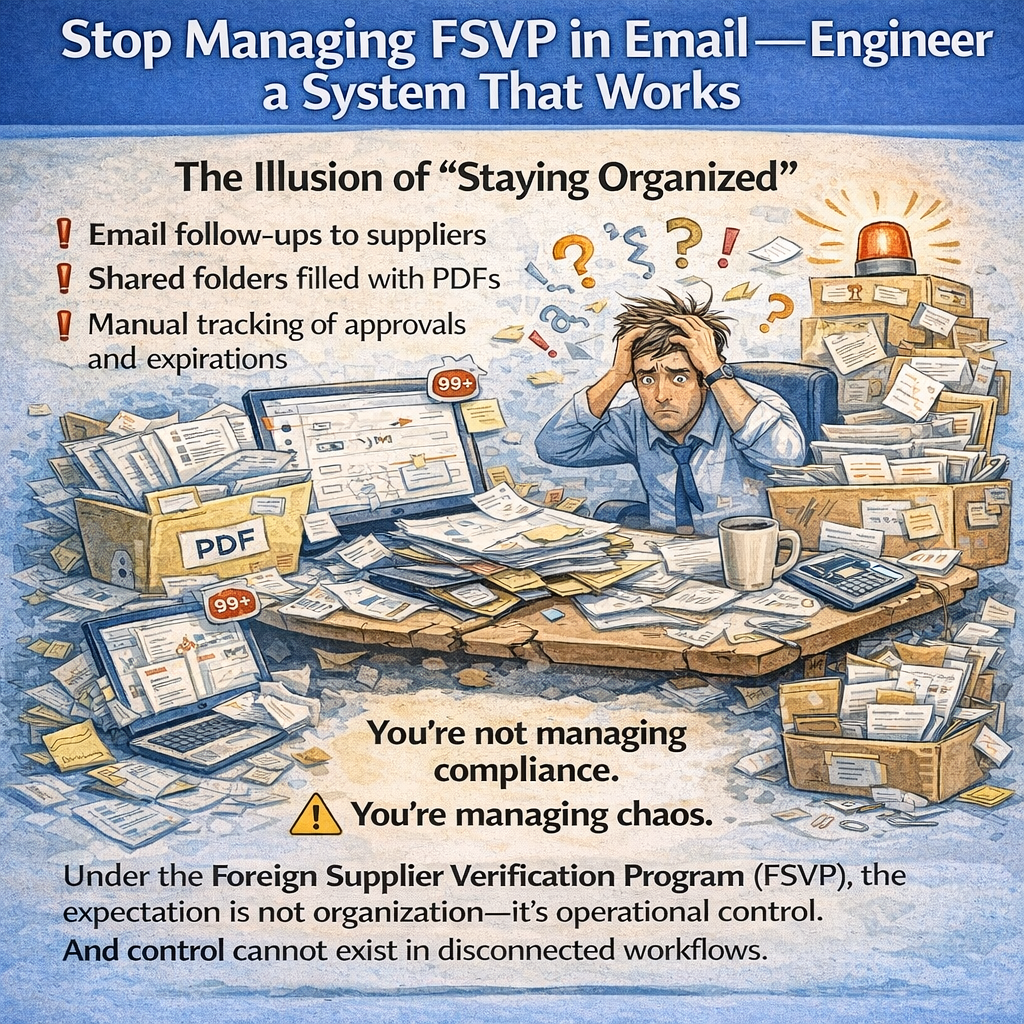
If your FSVP program depends on:
- Email follow-ups to suppliers
- Shared folders filled with PDFs
- Manual tracking of approvals and expirations
You’re not managing compliance.
You’re managing chaos.
Under the Foreign Supplier Verification Program (FSVP), the expectation is not organization—it’s operational control.
And control cannot exist in disconnected workflows.
The Hidden Risk: Fragmented Compliance
Why Most FSVP Programs Fail Under FDA Inspection
Most importers believe they are compliant—but what they actually have is disconnected documentation, not a defensible FSVP system.
What Importers Think Is Compliance
Documents exist—but they are not structured into a system.
- Supplier documents on file
- Hazard analyses saved in isolation
- Certificates of Analysis (COAs) attached to shipments
What FDA Actually Evaluates
Inspectors assess whether your program is integrated and risk-based.
- Documented supplier approval decisions
- Product-specific hazard identification
- Defined verification activities
The Critical Breakdown
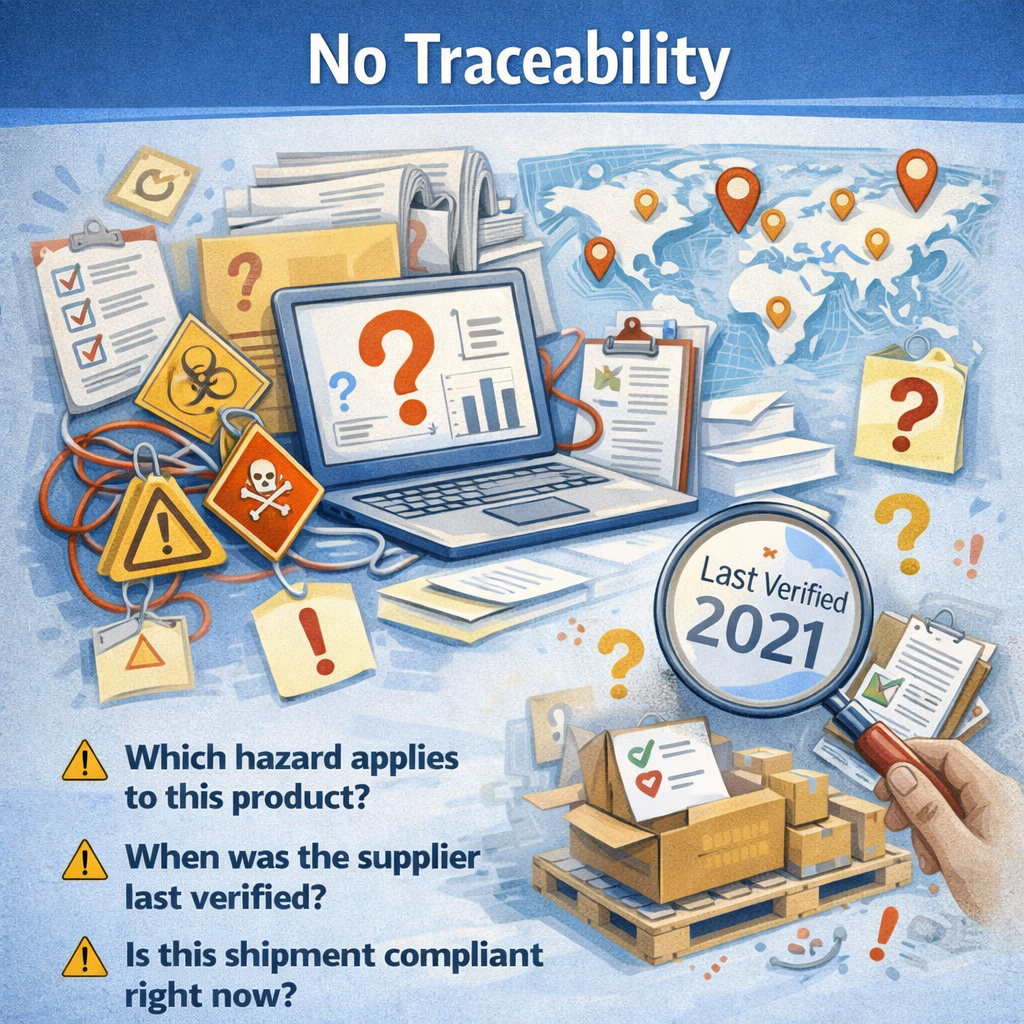
There is no system connecting core compliance elements.
- Supplier approval is not tied to product risk
- Hazard controls are not verified
- Verification is not linked to shipments
The Real Risk
Without structure, your FSVP program is not defensible.
- No traceable compliance logic
- No documented decision-making chain
- High risk of FDA Form 483 or enforcement action
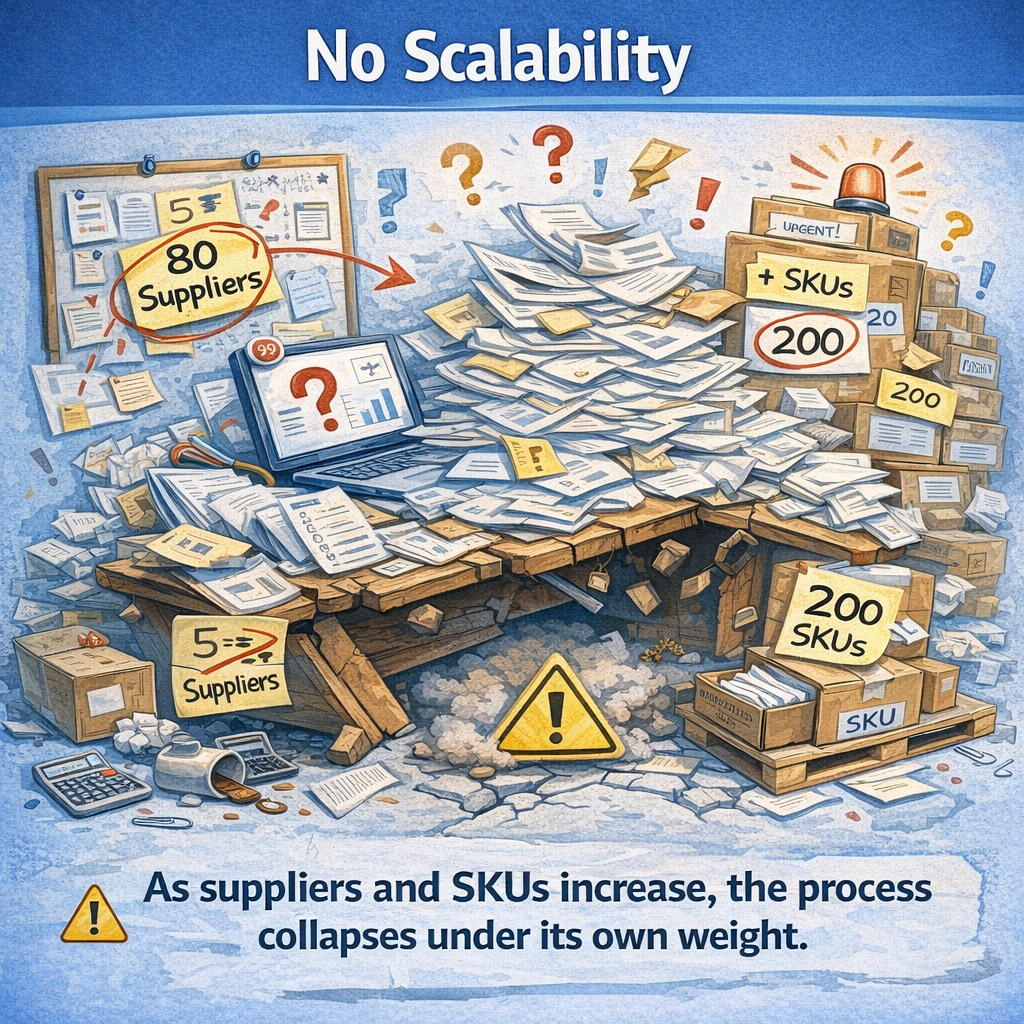
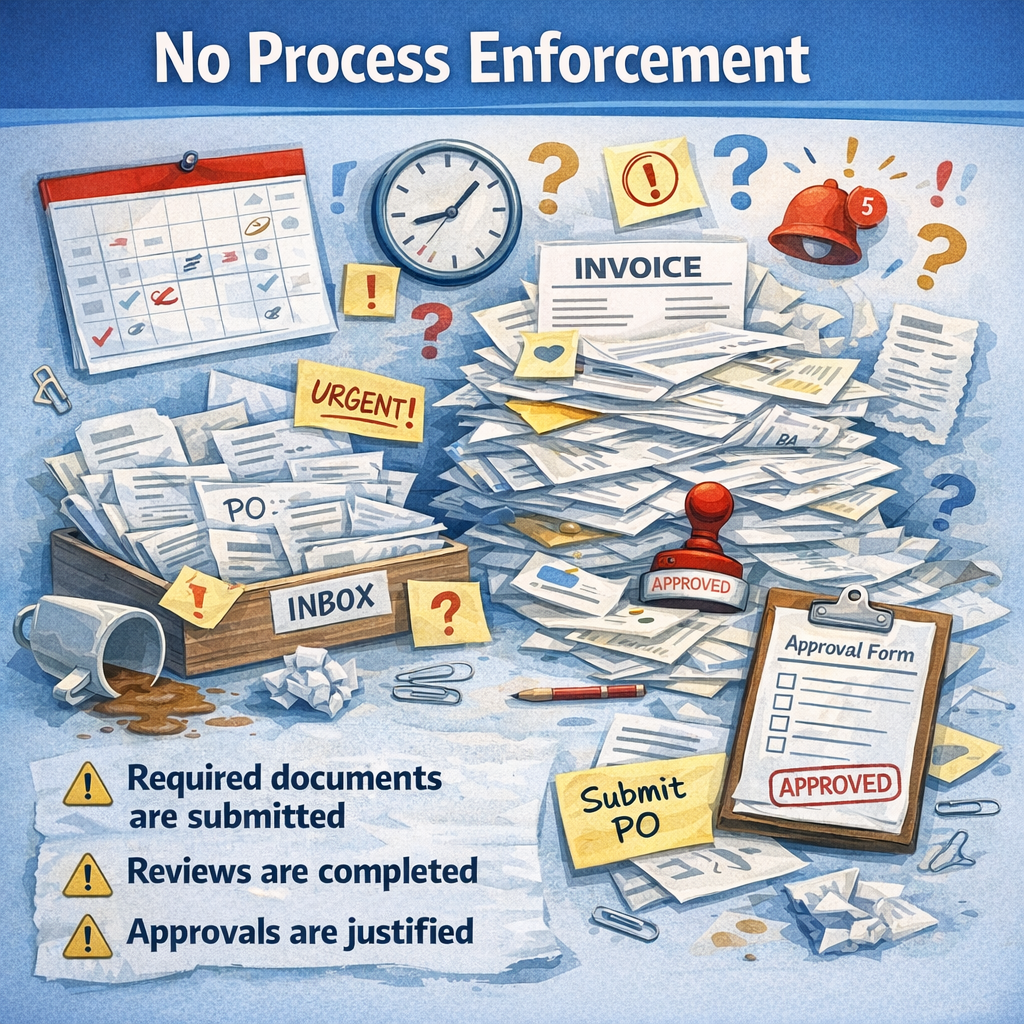
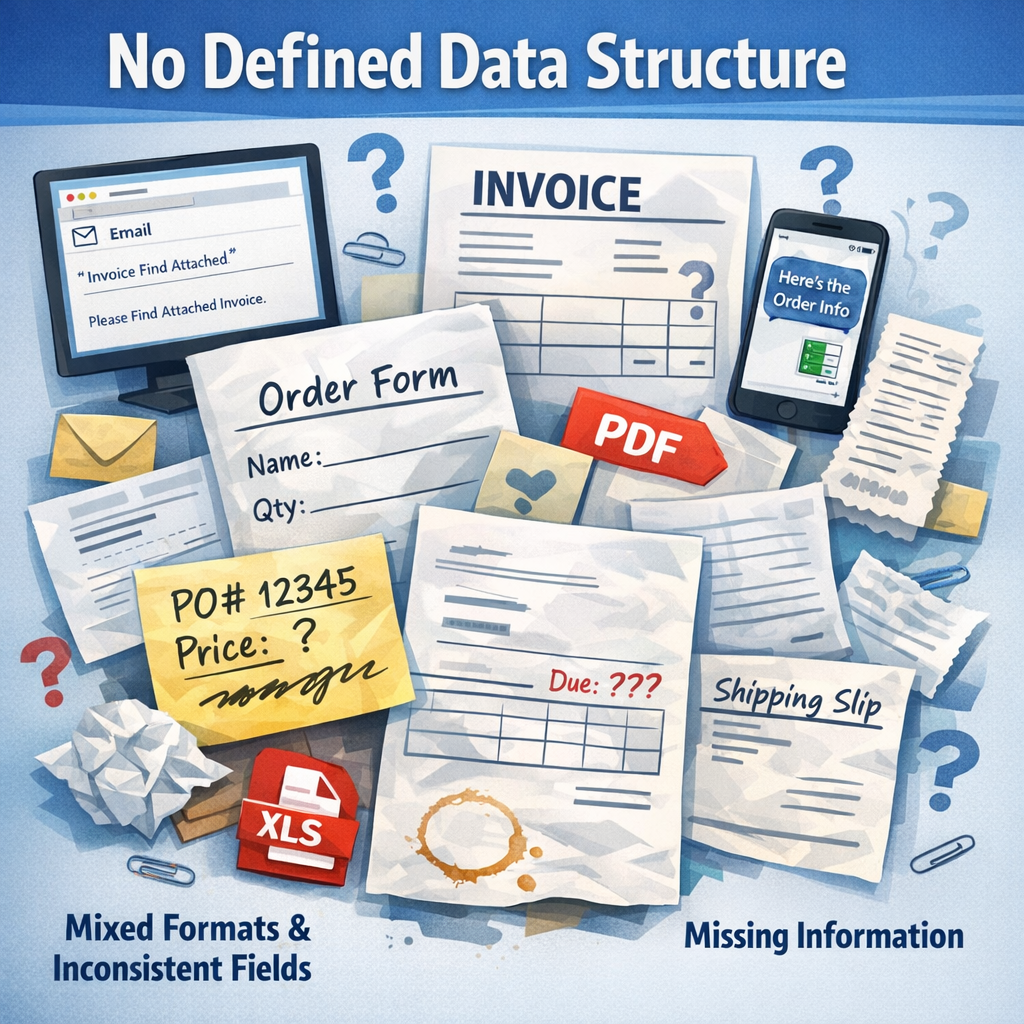
Why Email-Based FSVP Breaks Down
What FDA Is Actually Evaluating
What FDA Is Actually Evaluating
FDA is not reviewing documents in isolation—it is assessing whether your FSVP program operates as a fully connected, risk-based control system.
System, Not Files
Compliance is determined by structure, not document volume.
- FSVP must function as an integrated system
- Documentation must support decision-making
- Records must demonstrate control, not storage
Required Compliance Chain
Every element must be logically connected.
- Supplier → Product → Hazard
- Hazard → Preventive Control → Verification
- Verification → Shipment → Records
FDA Expectations
Each link in your system must meet strict criteria.
- Clearly defined and documented
- Risk-based and scientifically justified
- Actively maintained and updated
Inspection Reality
Break one link, and the system fails.
- Missing connections invalidate compliance
- Gaps expose lack of control
- Records must be immediately retrievable upon request
The Operational Shift: From Files to Framework
The Operational Shift: From Files to Framework
FSVP compliance is no longer about collecting documents—it requires executing a structured, risk-based system that operates continuously and predictably.
Legacy Model (Reactive)
Disconnected actions with no system control.
- Request documents only when needed
- Store files in folders without structure
- Review inconsistently across suppliers and products
- Prepare only when facing an audit or inspection
System Model (Preventive)
A controlled, risk-based compliance framework.
- Define required data before supplier onboarding
- Standardize supplier documentation and submissions
- Automate verification activities and schedules
- Maintain real-time compliance visibility
- Validate every shipment against defined system rules
What Changes Operationally
The shift is structural—not just procedural.
- From reactive document collection to proactive control
- From isolated reviews to continuous verification
- From audit preparation to audit readiness at all times
The Bottom Line
This defines whether your program is defensible.
- Managing documents ≠ FSVP compliance
- Executing a system = regulatory control
- Framework-driven programs withstand FDA inspection
What a System-Driven FSVP Program Includes
A defensible FSVP program is built on structured control, not document collection—where every component is defined, connected, and continuously executed.
Controlled Supplier Onboarding
Standardized inputs replace inconsistent documentation.
- Suppliers submit structured, required data
- No reliance on random or incomplete documents
- Defined onboarding requirements before approval
Product-Level Hazard Architecture
Each product is mapped to risk and control.
- Identification of known or foreseeable hazards
- Defined preventive controls
- Clear supplier responsibility assignment
Verification & Compliance Control
Activities are managed through a structured system.
- Verification activities are scheduled and assigned
- All actions are tracked and documented
- Justification supports every verification decision
- Records are standardized, searchable, and audit-ready
Shipment Release Control
No shipment moves without compliance validation.
- Supplier approval is confirmed
- Hazard analysis is current and complete
- Verification activities are valid and up to date
- Shipment is cleared only when all conditions are met
Build Once. Operate Continuously.
FSVP is not about collecting documents—it is about demonstrating control through a structured, repeatable system that operates continuously.
From Chaos to Control
Replace reactive processes with system-driven execution.
- Eliminate manual supplier follow-ups
- Remove fragmented and inconsistent workflows
- Establish a controlled compliance structure
Standardized FSVP System
Every process is defined, repeatable, and scalable.
- Standardize supplier onboarding and data collection
- Align hazard analysis, verification, and records
- Ensure consistency across all products and suppliers
Real-Time Compliance Visibility
Know your compliance status at all times.
- Track verification activities in real time
- Maintain audit-ready records instantly
- Identify and resolve gaps before inspections
Inspection Confidence
Operate with full regulatory defensibility.
- Demonstrate a fully connected FSVP system
- Respond to FDA requests immediately
- Pass inspections with confidence