Top 10 FSVP Violations Found During FDA Inspections (And How to Avoid Them)
Why This Matters
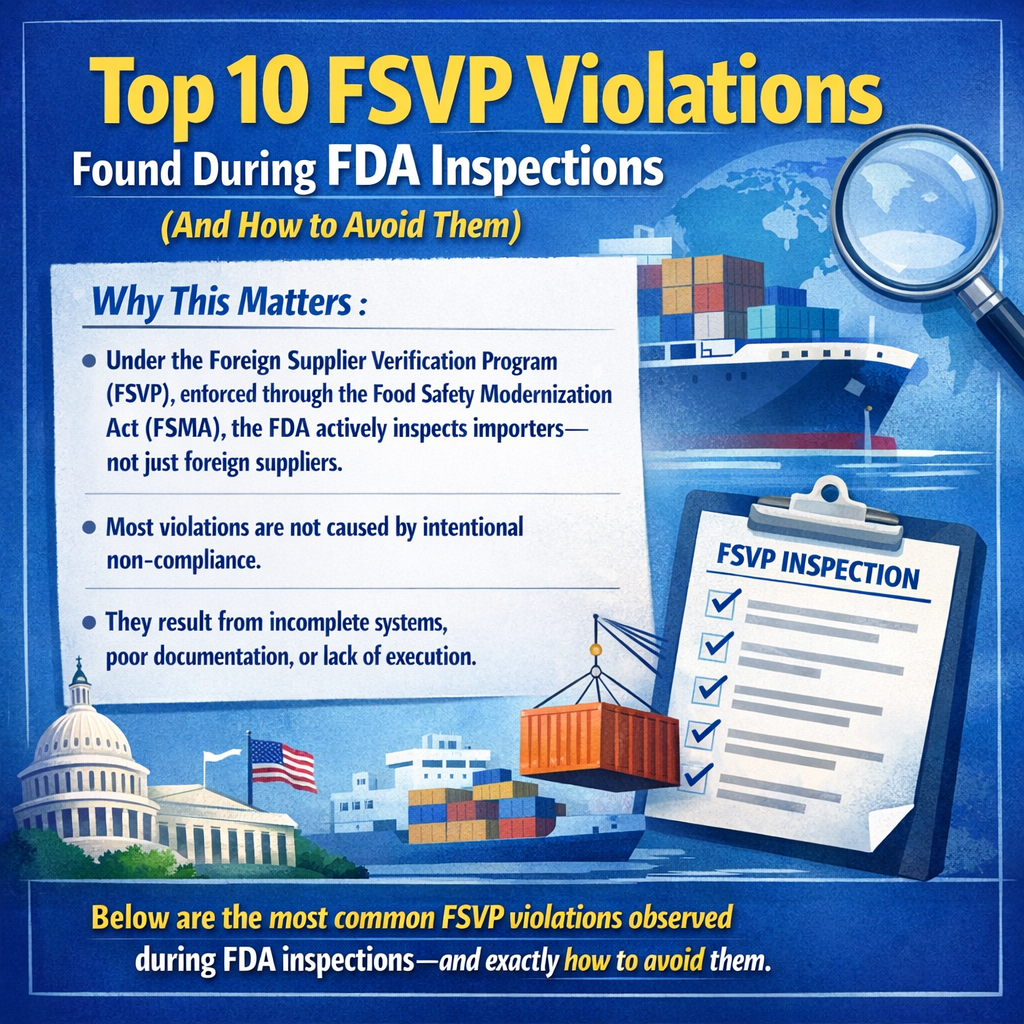
Under the Foreign Supplier Verification Program (FSVP), enforced through the Food Safety Modernization Act (FSMA), the FDA actively inspects importers—not just foreign suppliers.
Most violations are not caused by intentional non-compliance.
They result from incomplete systems, poor documentation, or lack of execution.
Below are the most common FSVP violations observed during FDA inspections—and exactly how to avoid them.
Top 10 FSVP Violations Found During FDA
1. No FSVP Program
Violation: No written program.
Why It Fails: FDA requires a documented system.
- Develop formal FSVP program
- Cover all suppliers/products
- Maintain as living system
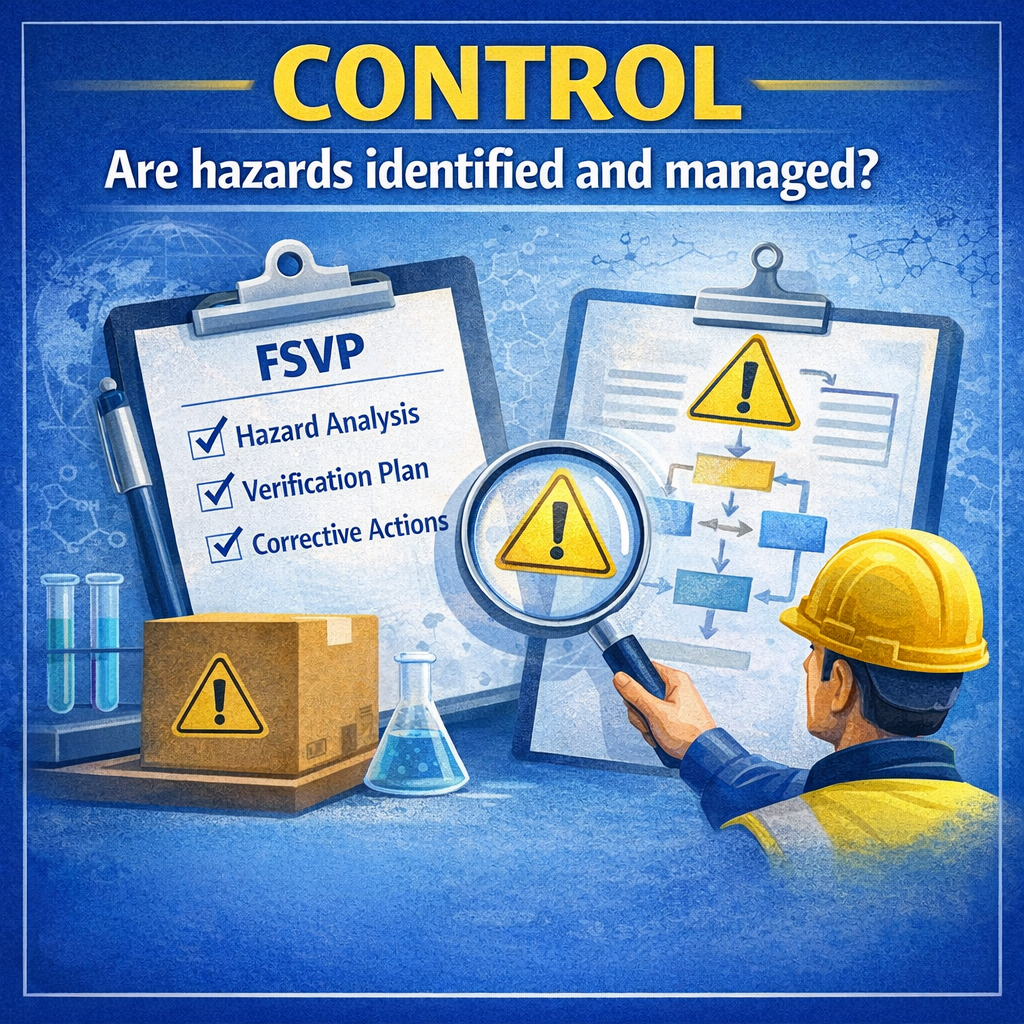
2. Missing Hazard Analysis
Violation: No hazard analysis.
Why It Fails: Foundation of FSVP is missing.
- Analyze each product
- Evaluate all hazard types
- Document conclusions
3. Weak Hazard Analysis
Violation: Generic or copied analysis.
Why It Fails: Not product-specific.
- Customize per product
- Include scientific basis
- QI approval required
4. No Supplier Evaluation
Violation: No justification for approval.
Why It Fails: Supplier risk not assessed.
- Review safety history
- Check audits/certifications
- Assign risk levels
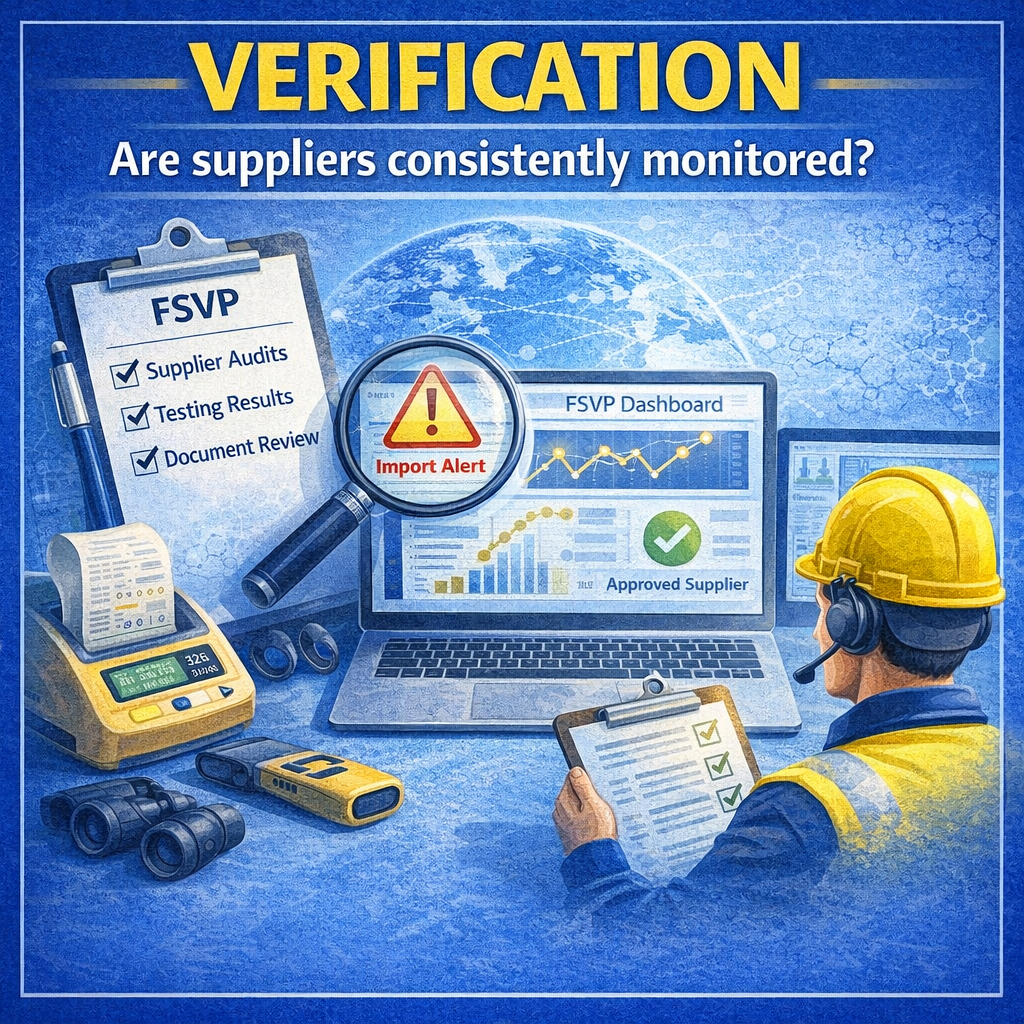
5. No Verification
Violation: No supplier verification.
Why It Fails: No proof of control.
- Implement audits/testing
- Use risk-based frequency
- Document activities
6. No Qualified Individual
Violation: No QI assigned.
Why It Fails: No oversight authority.
- Assign qualified person
- Document credentials
- Ensure review/approval
7. No Corrective Actions
Violation: Issues not addressed.
Why It Fails: No active control.
- Define procedures
- Document incidents
- Take corrective steps
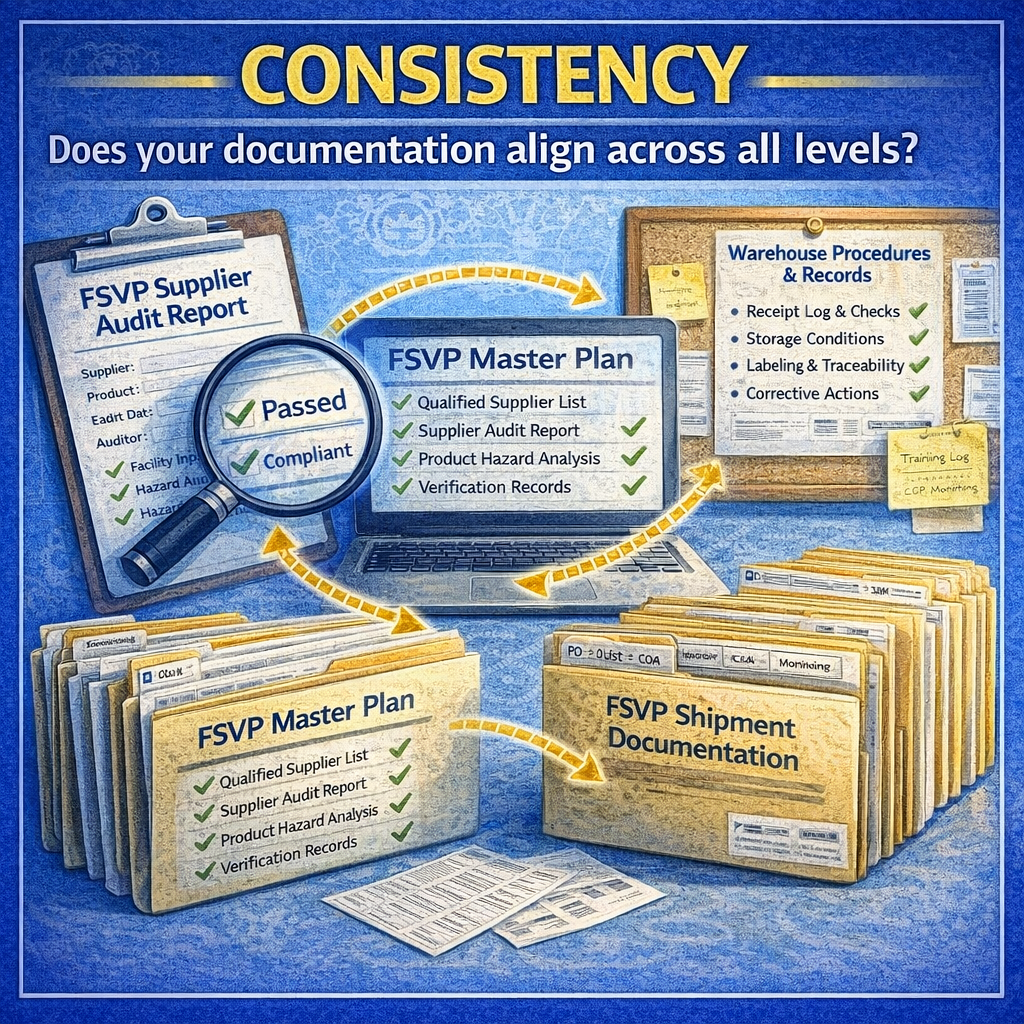
8. Poor Records
Violation: Missing or disorganized.
Why It Fails: FDA sees “not done.”
- Maintain full documentation
- Organize consistently
- Ensure 24-hour access
9. No Reevaluation
Violation: No supplier review.
Why It Fails: System not maintained.
- Reevaluate every 3 years
- Update risk assessments
- Document changes
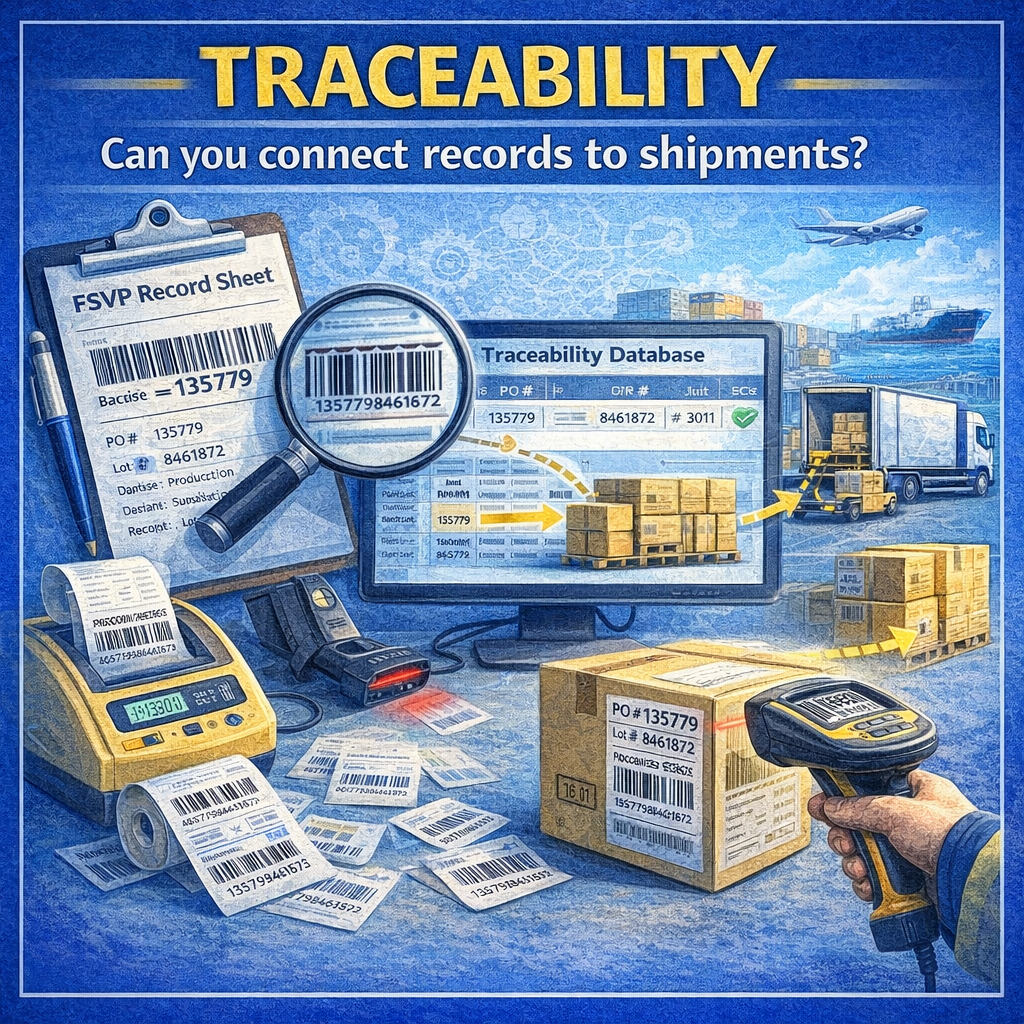
10. No Shipment Link
Violation: Not tied to imports.
Why It Fails: No real-world execution.
- Link shipments to suppliers
- Match hazard analysis
- Align with entry filings
What FDA Is Really Evaluating
The Root Cause of Most Violations
The Root Cause of Most Violations
Nearly all FSVP failures come down to one issue:
Lack of a structured, operational system.
Why Importers Fail
Importers relying on:
→ Spreadsheets
→ Email chains
→ Static templates
…typically fail under FDA inspection.
Systems Pass Inspections. Disconnected Tools Fail Them.
How to Prevent Violations at Scale
Systemize Your FSVP Execution
The most effective approach is to move beyond manual processes and implement a structured, technology-driven compliance system.
Advanced importers achieve this using platforms like SystemsBuilder.pro.
What This Means for You:
System Benefits
→ Centralized compliance records
→ Standardized workflows
→ Real-time verification tracking
→ Audit-ready documentation
Control the System. Control the Risk. Stay Inspection Ready.
Final Takeaway
Your FSVP program must function as a defensible, risk-based system—not just documentation.
Your System Must Demonstrate:
- Product-specific hazard control
- Documented supplier oversight
- Ongoing verification tied to shipments
Regulatory Reality
If your program cannot clearly demonstrate these elements, it is at risk of FDA enforcement.
If You Can’t Prove It, You Don’t Have It.
Need to Fix or Build Your FSVP System?
Whether you are correcting gaps or starting from scratch, your FSVP system must be structured, documented, and continuously managed.
FSVPServices.com helps importers implement and maintain inspection-ready compliance systems.
What This Means for You:
- Correct existing compliance gaps
- Build complete FSVP systems
- Manage supplier and product verification
- Maintain shipment-level compliance
Take Action Before FDA Does
→ Identify and fix compliance gaps
→ Build a defensible FSVP system
→ Ensure every shipment meets FDA expectations
→ Stay inspection-ready at all times
Fix the Gaps. Build the System. Stay Compliant.