How to Build an FSVP Program from Scratch (Step-by-Step System Approach)
Start with the Right Mindset: FSVP is a System, Not a Document
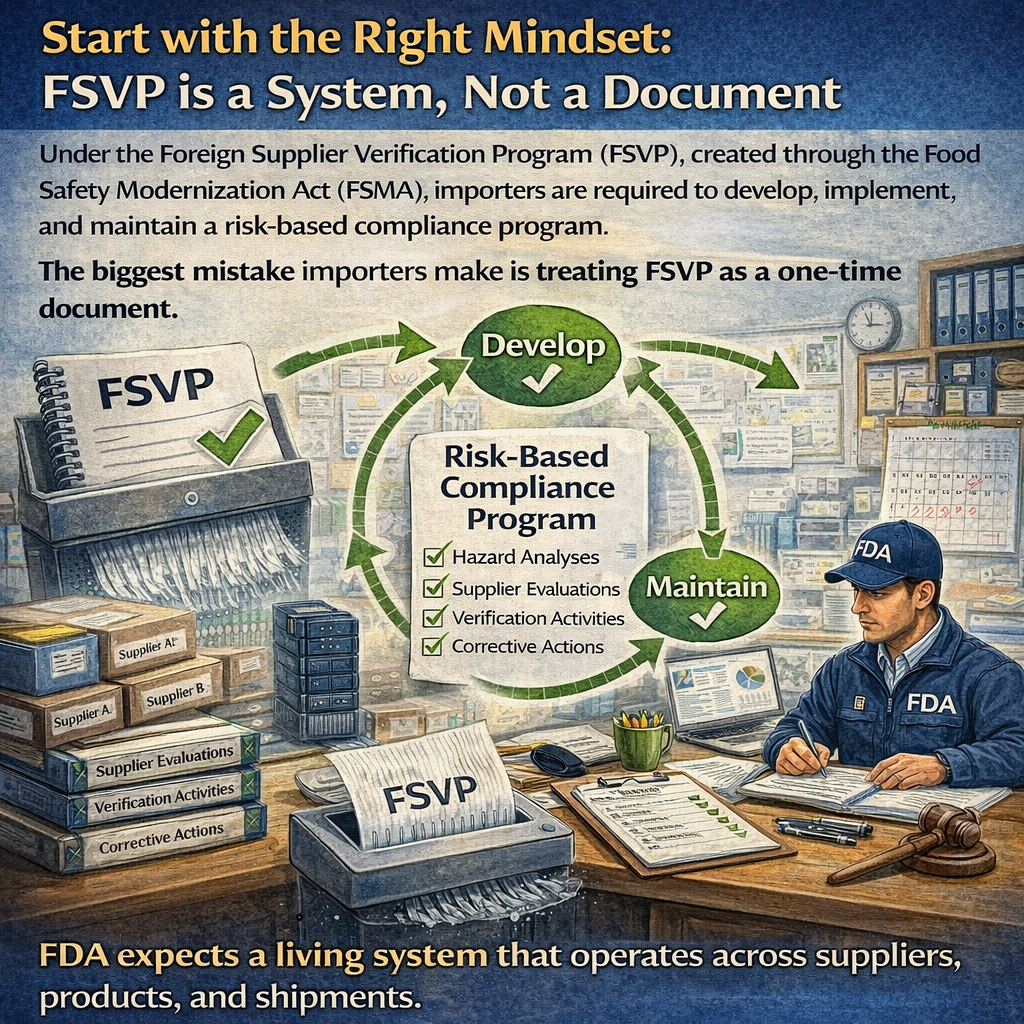
Under the Foreign Supplier Verification Program (FSVP), created through the Food Safety Modernization Act (FSMA), importers are required to develop, implement, and maintain a risk-based compliance program.
The biggest mistake importers make is treating FSVP as a one-time document.
FDA expects a living system that operates across suppliers, products, and shipments.
FSVP Implementation Framework (Step-by-Step System)
Step 1 — Importer Structure
Objective: Define FSVP responsibility.
- Identify Importer of Record
- Verify DUNS number
- Match FDA entry records
- Define internal roles
Output: Defined importer profile.
Step 2 — Qualified Individual
Objective: Ensure accountability.
- Assign QI
- Document training/experience
- Define oversight responsibilities
Output: Designated compliance authority.
Step 3 — Product Inventory
Objective: List all imported foods.
- Catalog products
- Define ingredients & processing
- Specify packaging & use
Output: Structured product list.
Step 4 — Hazard Analysis
Objective: Identify risks.
- Biological, chemical, physical hazards
- Determine preventive controls
- Document justification
Output: Product-level hazard analysis.
Step 5 — Supplier Approval
Objective: Validate suppliers.
- Collect safety documentation
- Review audits & certifications
- Assess compliance history
Output: Approved supplier list.
Step 6 — Verification
Objective: Confirm hazard control.
- Define audits, testing, reviews
- Set risk-based frequency
Output: Verification program.
Step 7 — Corrective Actions
Objective: Manage failures.
- Define triggers
- Set response actions
- Document events
Output: Corrective action system.
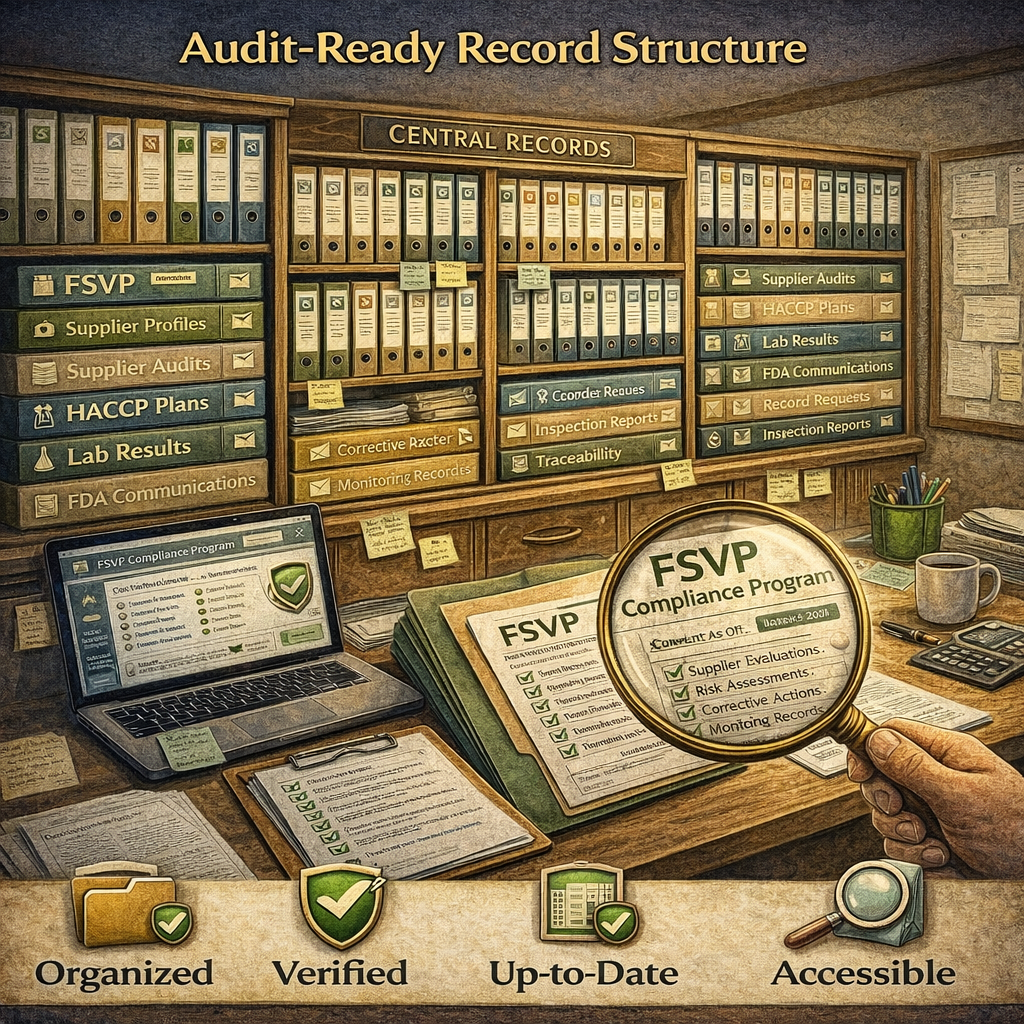
Step 8 — Recordkeeping
Objective: Ensure documentation.
- Organize records
- Ensure 24-hour access
- Standardize formats
Output: Audit-ready records.
Step 9 — Shipment Compliance
Objective: Control shipments.
- Verify supplier approval
- Match hazard analysis
- Align entry filings
Output: Shipment-level control.
Step 10 — Maintenance
Objective: Keep system current.
- Reevaluate suppliers
- Update hazard analyses
- Review performance
Output: Continuous compliance.
System Architecture: How It All Connects
A properly built FSVP program is not a collection of documents—it is a connected system.
Every component must align and function together to meet FDA expectations.
Core Structure:
Importer → Supplier → Product → Hazard → Verification → Shipment → Records
Each component must be:
- Connected
- Documented
- Justified
- Maintained
Modern Execution: Systemizing FSVP
Manual systems fail because they are:
→ Fragmented
→ Inconsistent
→ Difficult to maintain
Advanced importers implement platforms like SystemsBuilder.pro to centralize and standardize compliance.
System Benefits:
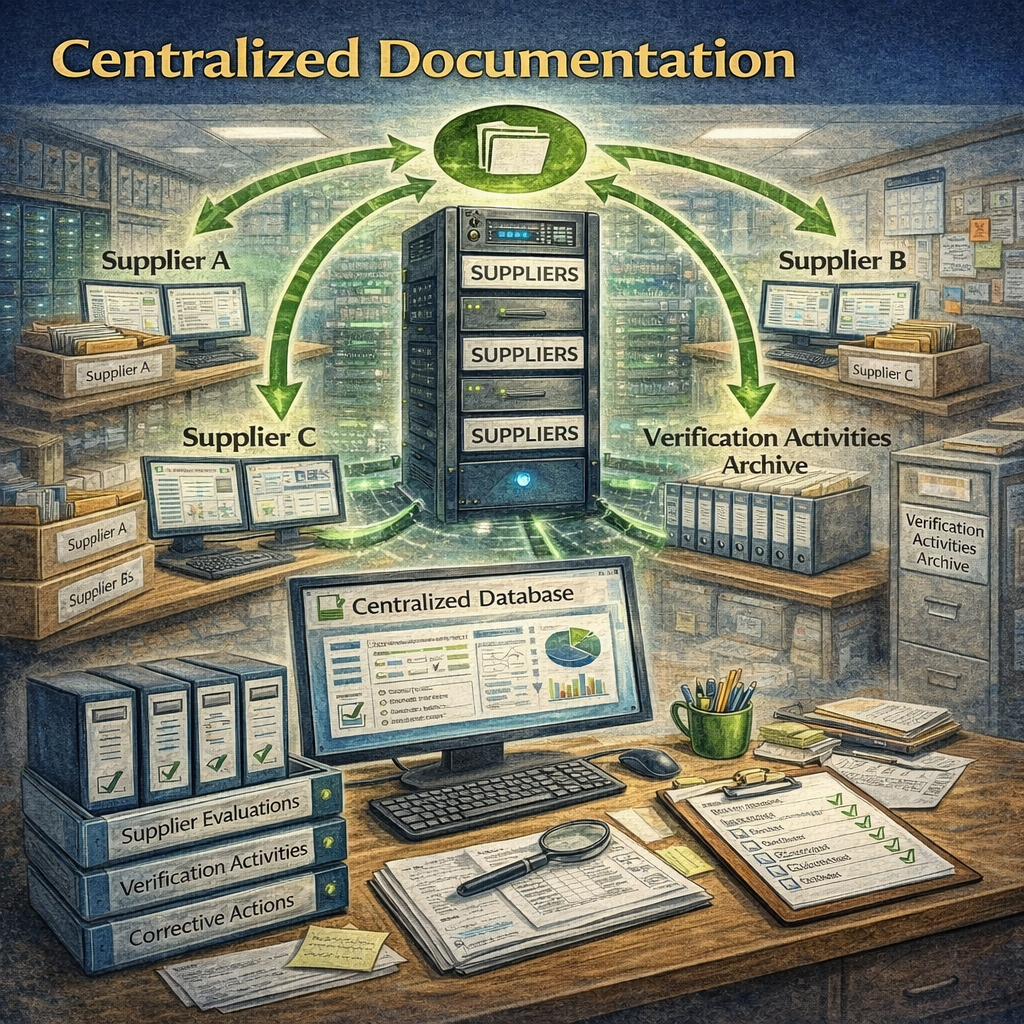
→ Centralized documentation
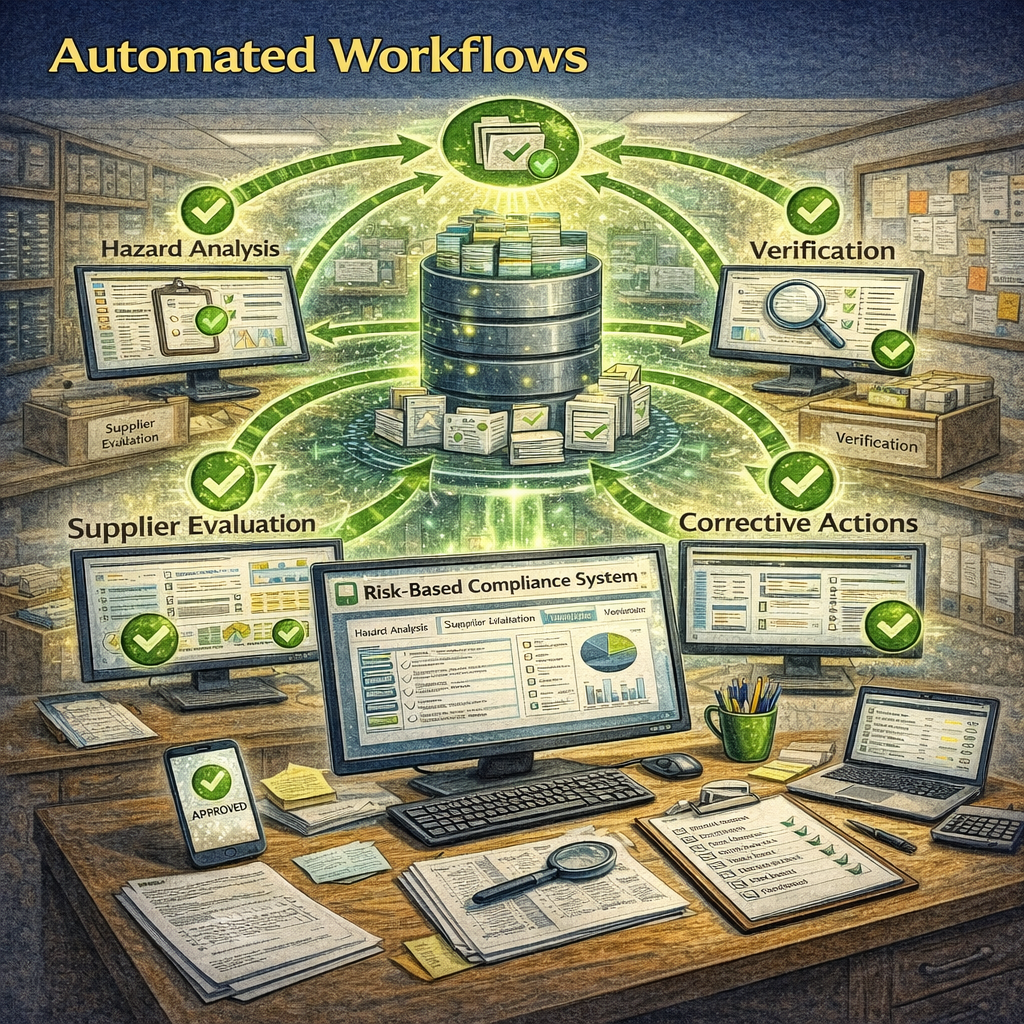
→ Automated workflows
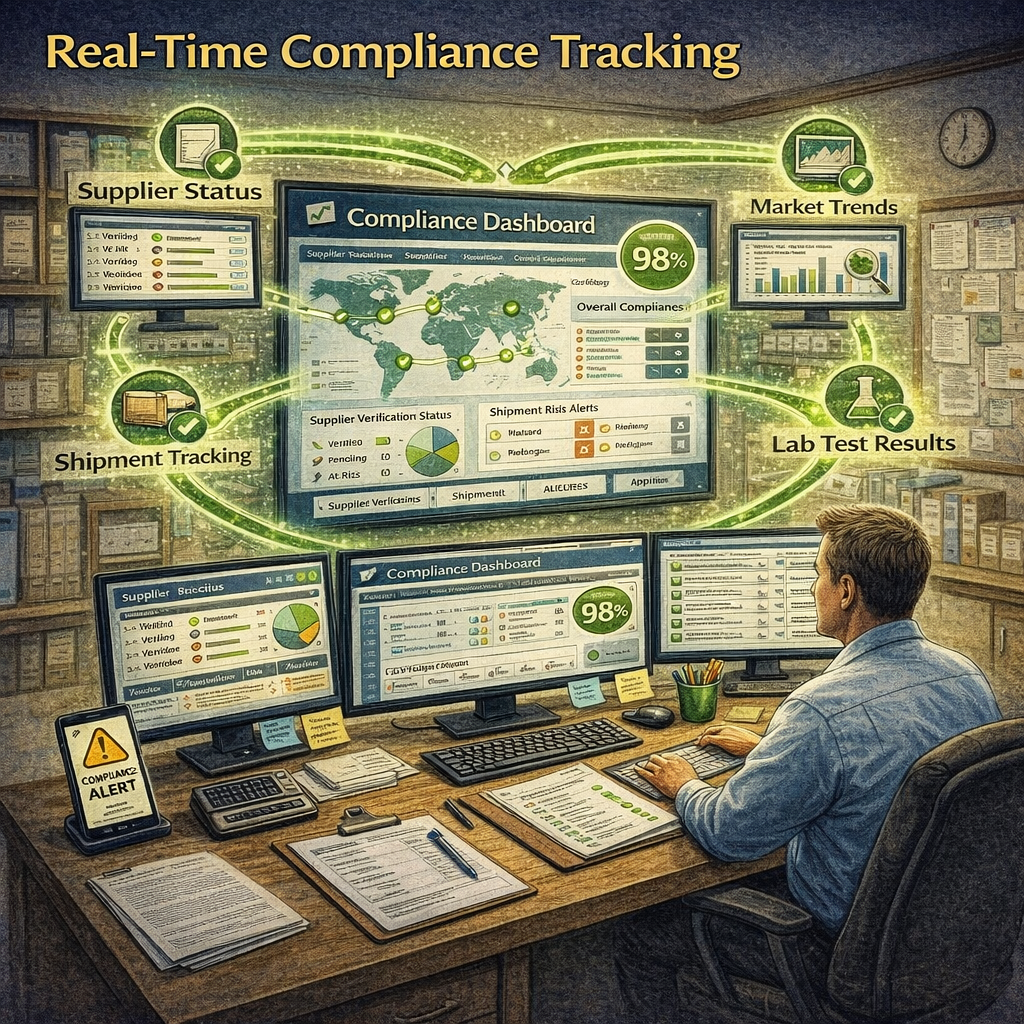
→ Real-time compliance tracking
→ Audit-ready record structure
Common Pitfalls When Building from Scratch:
- Treating FSVP as a template instead of a system
- Skipping product-level hazard analysis
- Approving suppliers without documented justification
- Failing to connect compliance to shipments
- Poor record organization
Systems Create Compliance. Disconnected Files Create Risk.
Final Takeaway
Building an FSVP program is not about filling out forms—it’s about creating a defensible, risk-based compliance system that FDA can audit at any time.
What Your System Must Demonstrate:
- Hazard control
- Supplier oversight
- Ongoing verification
Bottom Line
If your system cannot clearly demonstrate these elements, it is not compliant.
Compliance Is Not a Document. It’s a System You Can Defend.
Need Help Building Your FSVP System?
FSVPServices.com builds structured, compliant systems from the ground up—ensuring every element aligns with FDA expectations and operates as a complete program.
What We Provide
- Full program development from scratch
- Supplier and product compliance management
- Shipment-level verification
- Integration with SystemsBuilder.pro
Build it once. Build it correctly. Keep it compliant.