Complete Guide to FSVP Compliance (21 CFR 1 Subpart L) for U.S. Importers
Understanding Your Legal Responsibility as an Importer
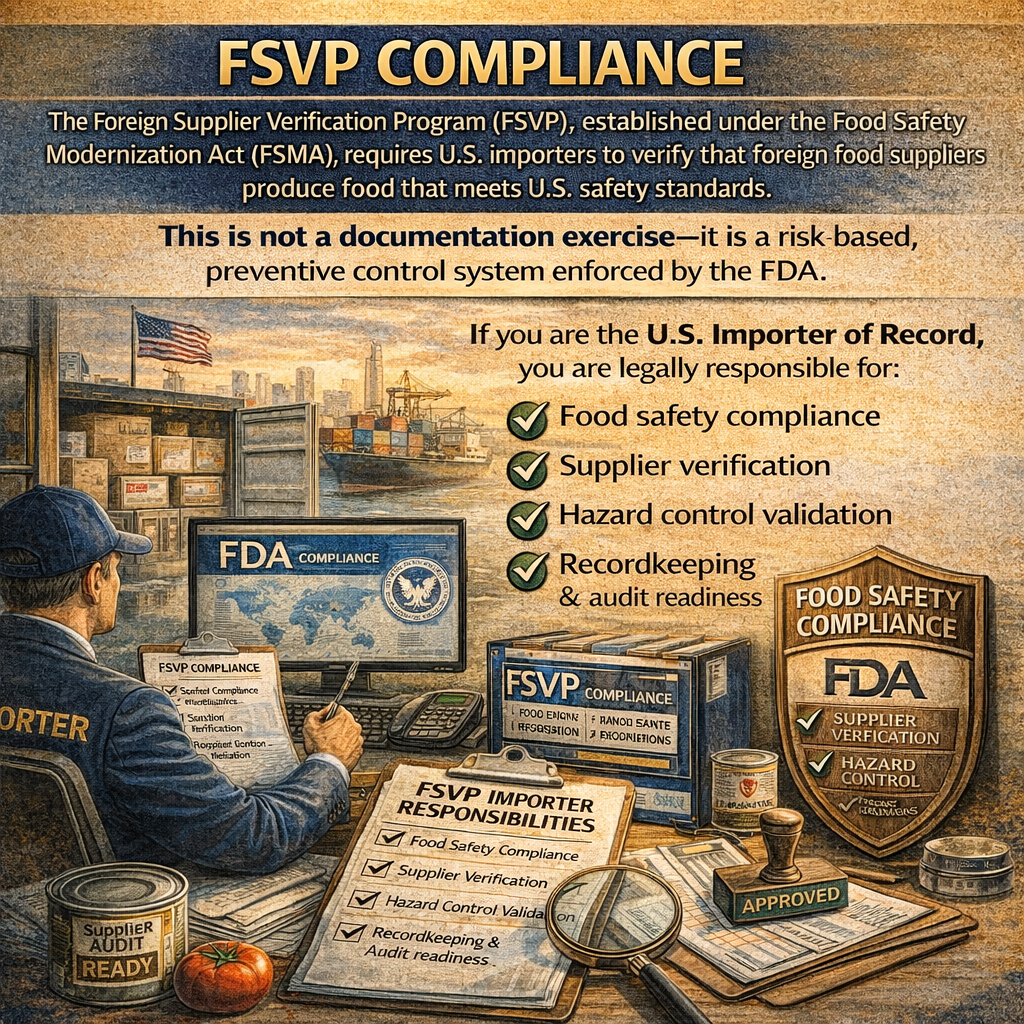
The Foreign Supplier Verification Program (FSVP), established under the Food Safety Modernization Act (FSMA), requires U.S. importers to verify that foreign food suppliers produce food that meets U.S. safety standards.
This is not a documentation exercise—it is a risk-based, preventive control system enforced by the FDA.
If you are the U.S. Importer of Record, you are legally responsible for:
- Food safety compliance
- Supplier verification
- Hazard control validation
- Recordkeeping and audit readiness
What is 21 CFR 1 Subpart L?
21 CFR 1 Subpart L — FSVP Framework
21 CFR 1 Subpart L defines the regulatory framework for FSVP and outlines the importer’s obligations.
Core Objective
To ensure that imported food:
- Is produced in compliance with U.S. food safety standards
- Is not adulterated or misbranded
- Meets preventive control requirements equivalent to U.S. regulations
Who Must Comply with FSVP?
Who FSVP Applies To
FSVP applies to:
- U.S.-based food importers
- Importers of Record (IOR)
- U.S. owners or consignees of imported food
Key Rule
If you are listed as the importer at entry, you are accountable—even if a broker or supplier is involved.
Core Components of an FSVP Program
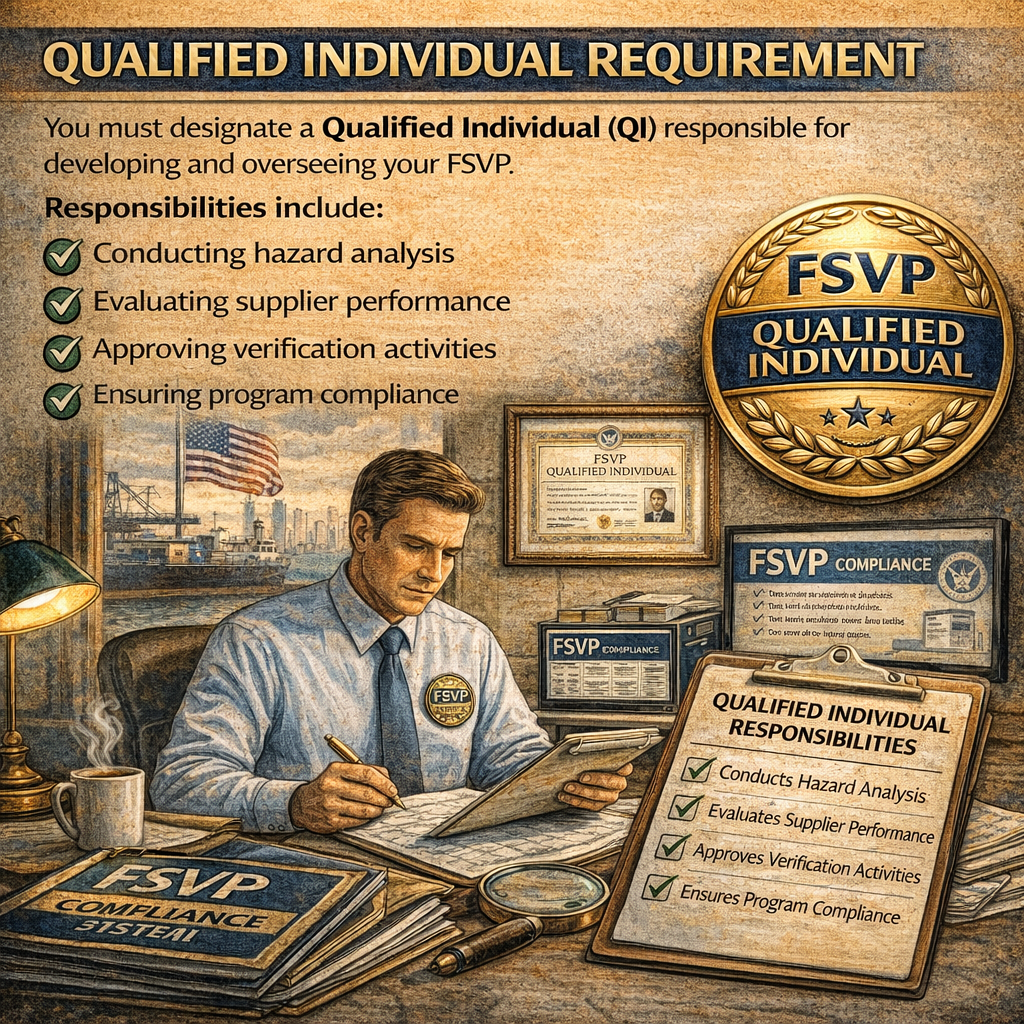
1. Qualified Individual Requirement
You must designate a Qualified Individual (QI) responsible for your FSVP.
Responsibilities include:
- Conducting hazard analysis
- Evaluating supplier performance
- Approving verification activities
- Ensuring program compliance
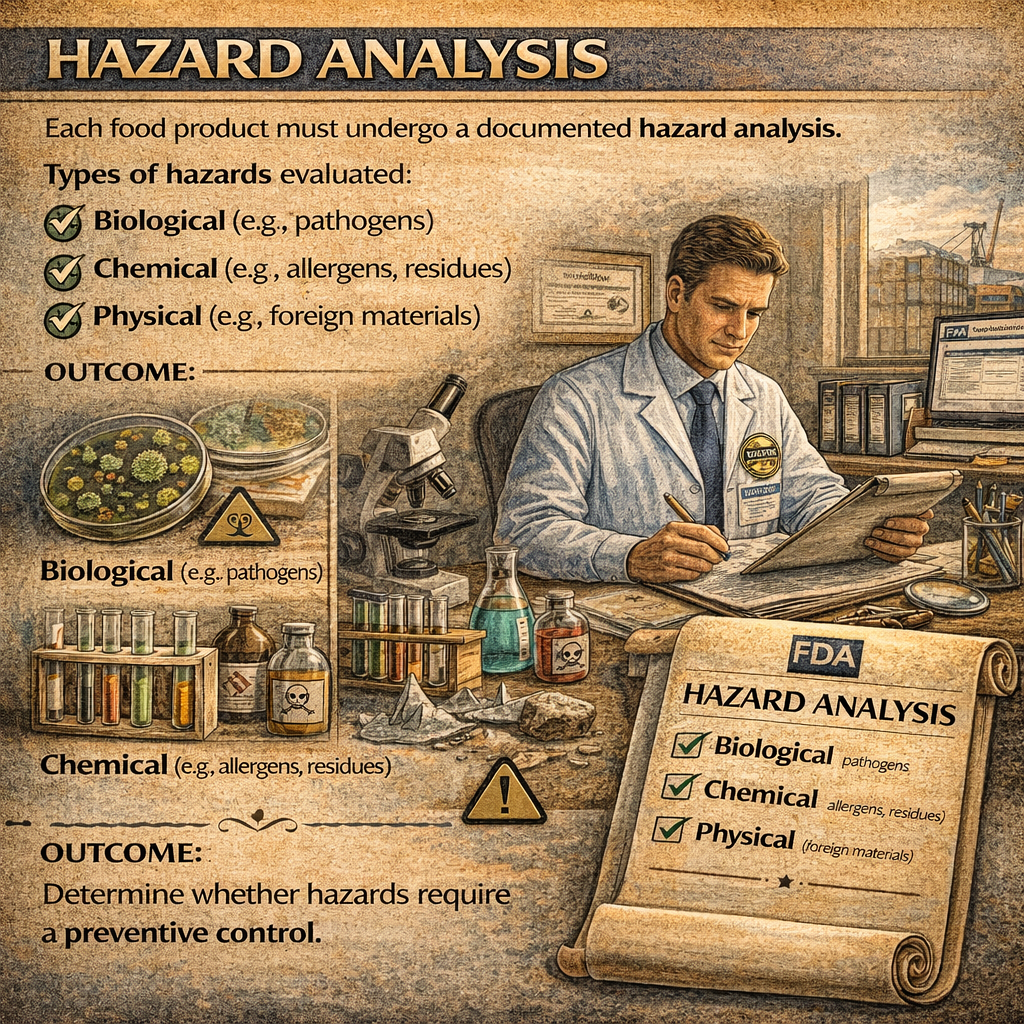
2. Hazard Analysis
Each product must undergo a documented hazard analysis.
Types of hazards evaluated:
- Biological (e.g., pathogens)
- Chemical (e.g., allergens, residues)
- Physical (e.g., foreign materials)
Outcome: Determine if hazards require preventive control.
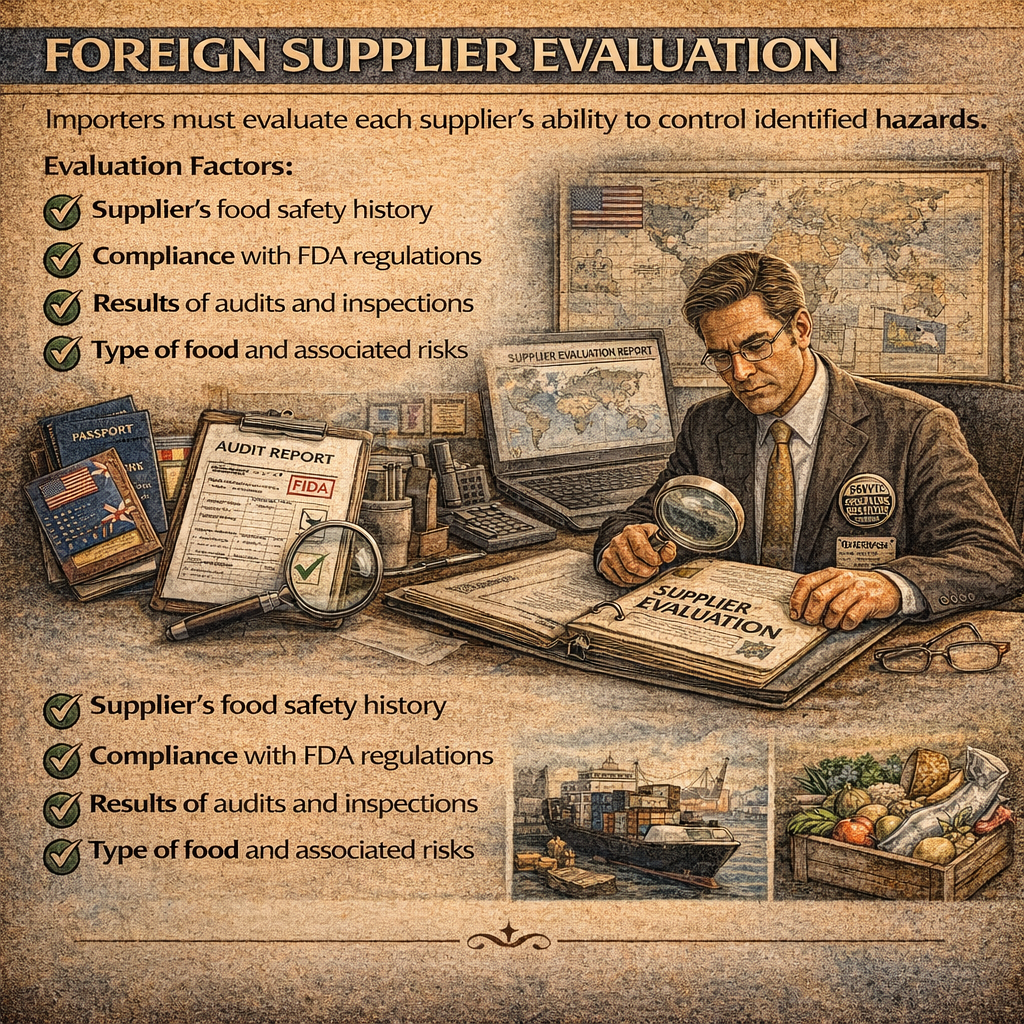
3. Foreign Supplier Evaluation
Evaluate each supplier’s ability to control hazards.
Evaluation factors:
- Supplier food safety history
- Compliance with FDA regulations
- Audit and inspection results
- Product risk profile
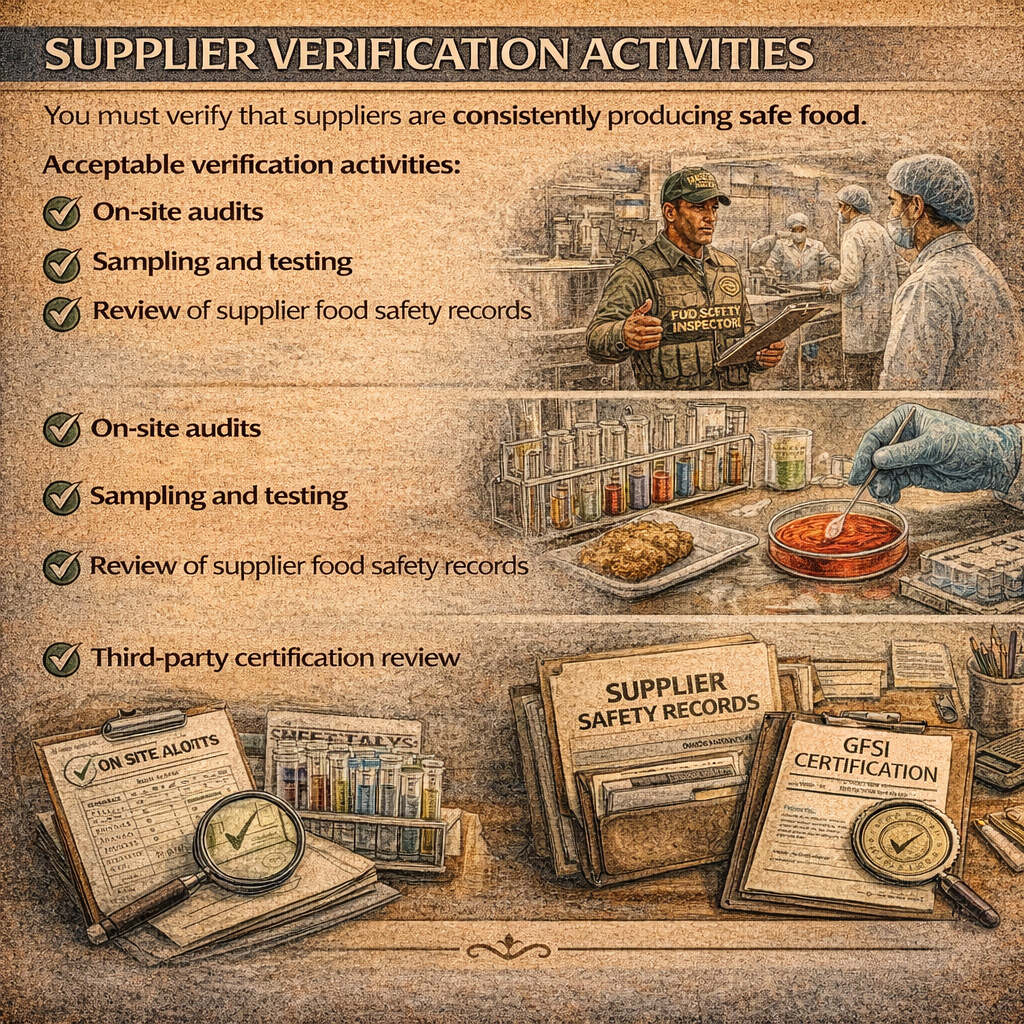
4. Supplier Verification Activities
Verify suppliers consistently produce safe food.
Acceptable activities:
- On-site audits
- Sampling and testing
- Review of food safety records
- Third-party certification review
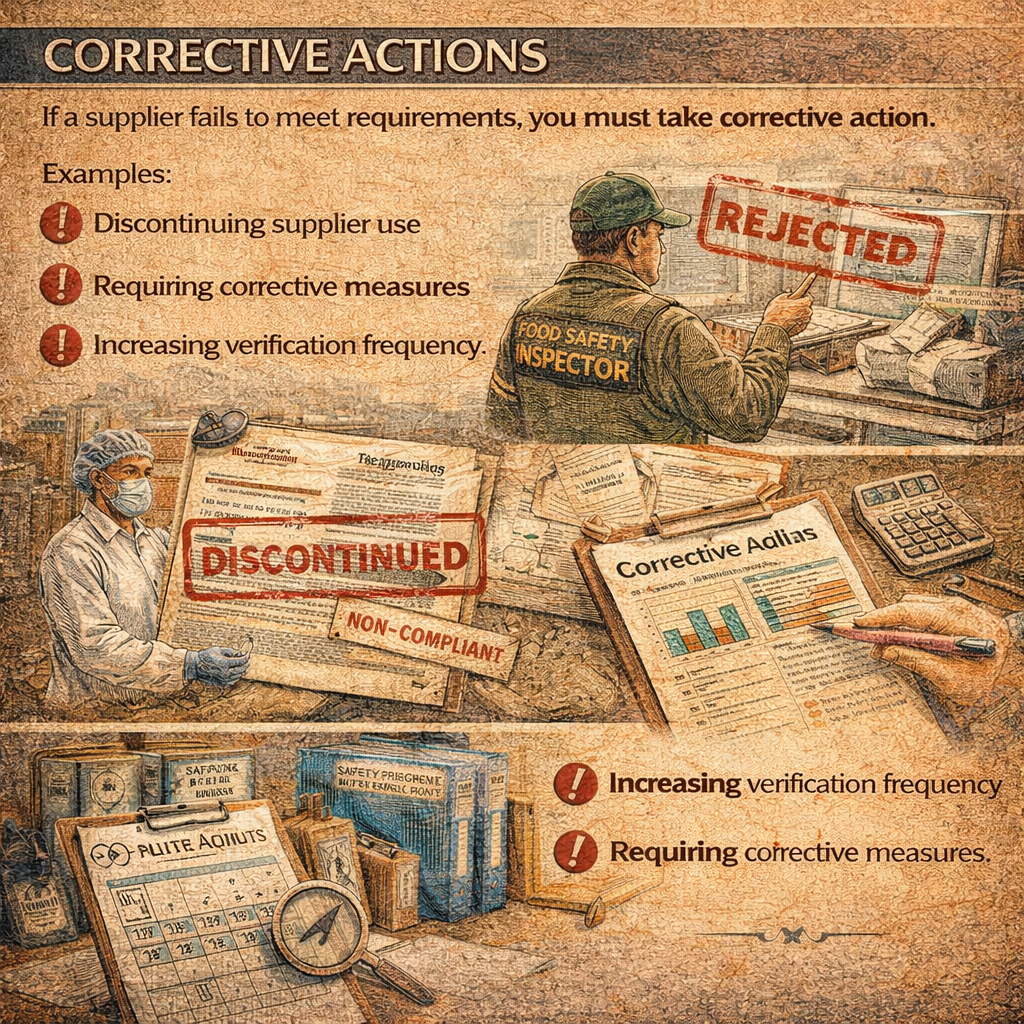
5. Corrective Actions
Take action when suppliers fail to meet requirements.
Examples:
- Discontinuing supplier use
- Requiring corrective measures
- Increasing verification frequency
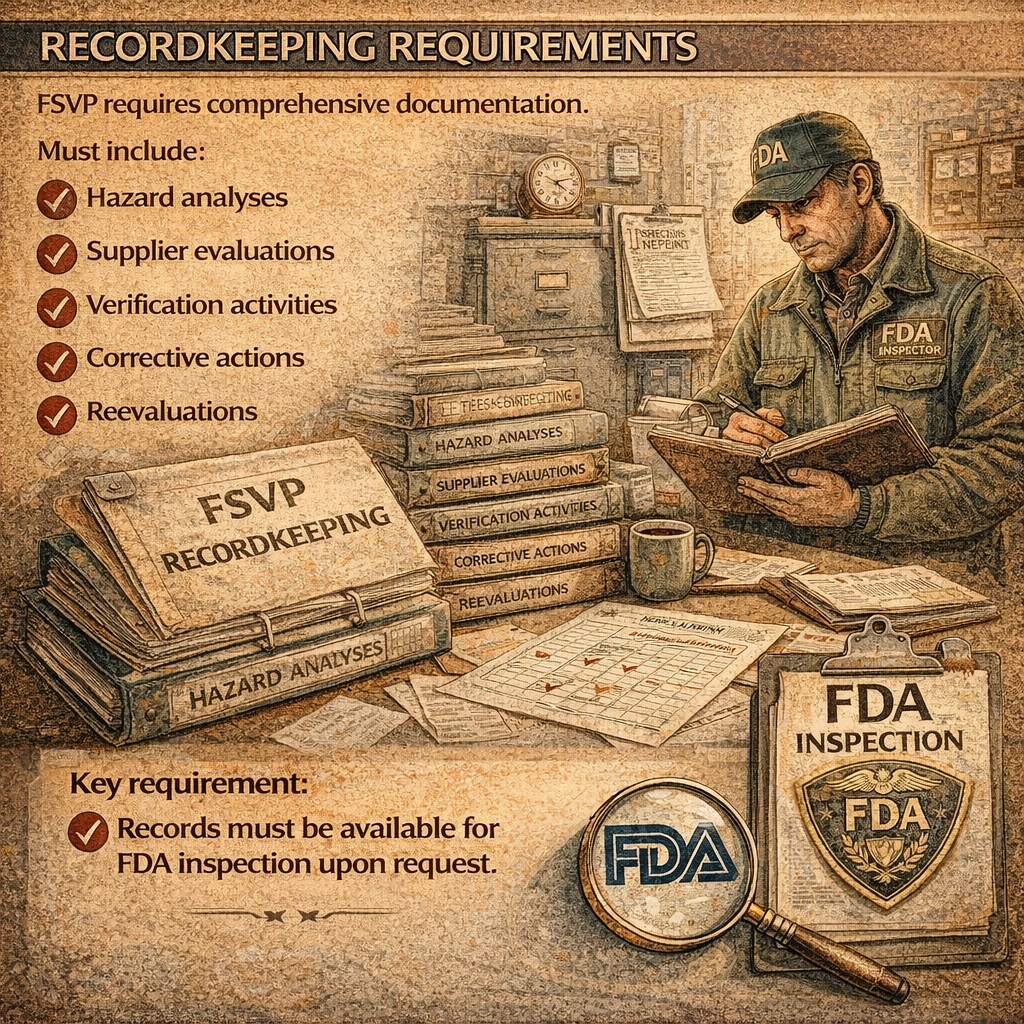
6. Recordkeeping Requirements
Maintain complete and accessible FSVP documentation.
Must include:
- Hazard analyses
- Supplier evaluations
- Verification activities
- Corrective actions
- Reevaluations
Key requirement: Records must be available for FDA inspection.
FSVP at the Shipment Level
Compliance Applies to Every Shipment
Compliance is not static—it applies to every shipment.
Each import entry must be supported by:
- Verified supplier status
- Product-specific hazard analysis
- Confirmation of compliance at time of entry
Failure at this level often results in:
- Shipment detention
- Import refusal
- Increased FDA scrutiny
Common FSVP Compliance Failures
Common High-Risk Compliance Gaps
Many importers fall into high-risk gaps:
- No documented hazard analysis
- Incomplete supplier verification
- Missing or inconsistent records
- Lack of a Qualified Individual
- Reactive (instead of preventive) compliance approach
These gaps frequently trigger FDA enforcement actions.
FDA Enforcement and Risk Exposure
Consequences of FSVP Non-Compliance
Non-compliance with FSVP can lead to:
- FDA Warning Letters
- Import Alerts (DWPE – Detention Without Physical Examination)
- Refusal of admission
- Business disruption and financial loss
The FDA actively inspects importers—not just manufacturers.
Best Practices for Building a Defensible FSVP System
1. Systemize Your Program
Avoid scattered documents—use structured workflows.
2. Standardize Documentation
Ensure consistency across suppliers, products, and shipments.
3. Maintain Ongoing Verification
FSVP is not a one-time setup—it requires continuous oversight.
4. Prepare for FDA Inspection
Assume your records will be reviewed at any time.
Modern Approach: Technology-Driven Compliance
Leading importers are moving toward integrated compliance systems like SystemsBuilder.pro.
Benefits include:
- Centralized documentation
- Automated workflows
- Real-time compliance tracking
- Audit-ready records
This approach reduces risk and increases operational control.
Conclusion: Compliance is a System, Not a File
FSVP under 21 CFR 1 Subpart L requires more than paperwork—it demands a structured, verifiable, and continuously managed system.
Your program must demonstrate:
- Risk-based decision making
- Supplier control
- Documented verification
If it cannot, it will not withstand FDA scrutiny.
Need Help Implementing FSVP?
FSVPServices.com provides structured, end-to-end support to ensure your program is built correctly and fully aligned with FDA expectations.
What We Deliver
- End-to-end FSVP system development
- Supplier and product compliance management
- Shipment-level verification support
- Integration with SystemsBuilder.pro
Build your compliance system correctly—from the start.